











.jpg)
.png)
.jpg)
.jpg)
.jpg)
.jpg)

.jpg)
.png)

Key Takeaways
- What’s a truck topper? Also known as a camper shell or truck cap — it’s basically a rigid or fabric canopy for your truck bed that keeps your cargo protected from weather, theft, and prying eyes.
- Not all toppers are created equal. You’ve got hard fiberglass caps (heavy, secure, paint-matched), aluminum and modular caps (rugged with wing doors for side access), and soft retractable tops (light, no-drill, and open up your whole bed in seconds).
- Weight matters more than you’d think. Soft truck toppers come in around 18-48 lbs, while fiberglass caps can tip the scales at 150+ lbs. And installing a soft truck top? No drilling required — just C-clamps and about an hour of your time.
- Budget-wise, there’s a real range. Soft tops typically land around $1,000-$1,300, aluminum and modular caps run $2,600-$4,600, and fiberglass pricing swings widely depending on the features.
- The right pick depends on how you actually use your truck. Want extra peace of mind for locked-up storage? A hard cap’s got you covered. But if you’re hauling gear regularly, want something light and easy to live with, and like the option to build it out for overlanding or adventure rigs down the road — that versatility is where soft tops really shine.
If you haul tools, groceries, camping gear, or anything you want to keep dry and out of sight, a truck bed topper changes what your pickup can do. This guide breaks down the best truck toppers by type, helps you figure out which style fits your needs, and covers real costs so you can make a confident choice. Whether you need a secure hard cap or a lightweight soft truck topper that retracts in seconds, you will find the comparison here.
What Is a Truck Topper?
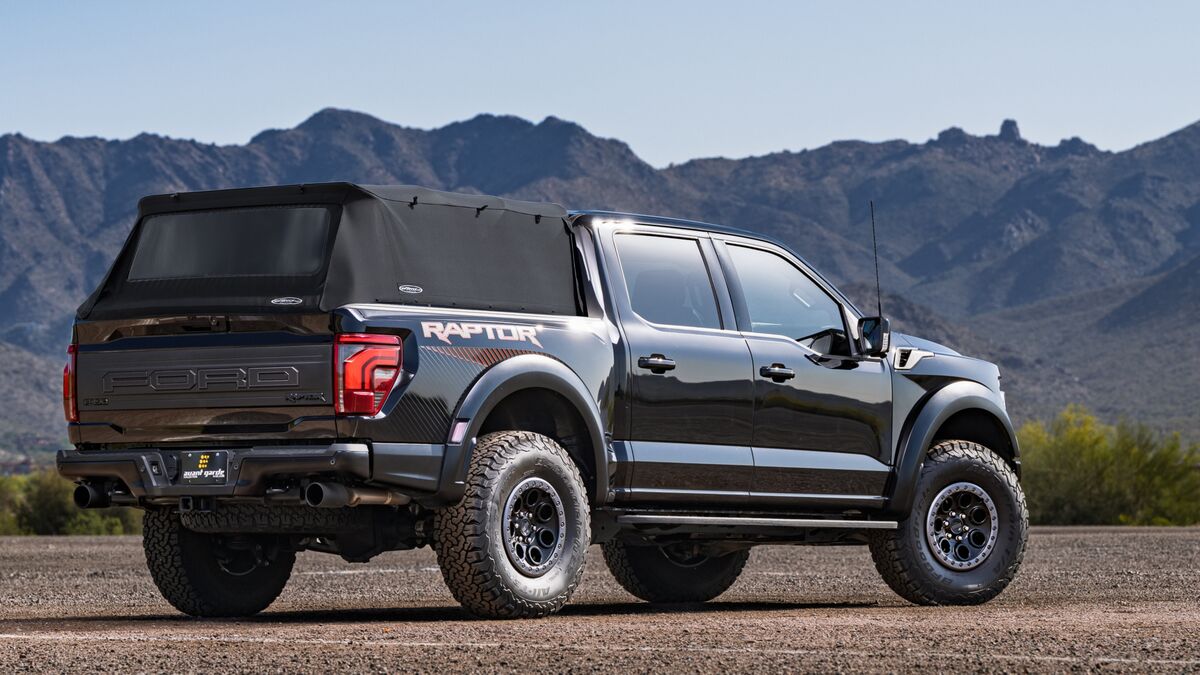
A truck topper is a canopy that covers your pickup bed, turning open cargo space into a protected, enclosed area. Toppers (also called truck caps, camper shells, or truck bed camper shells) shield your gear from rain, snow, sun, and theft while adding privacy. They attach to the bed rails and come in hard, semi-rigid, or soft designs depending on materials. A topper differs from a tonneau cover, which lies flat over the bed; a topper gives you standing cargo height (cab-high) for bulky items.
The terms “truck topper,” “truck cap,” and “camper shell” are used interchangeably in most regions. What matters is the style and material, which determines weight, security, access, and price.
The Main Types of Truck Bed Toppers
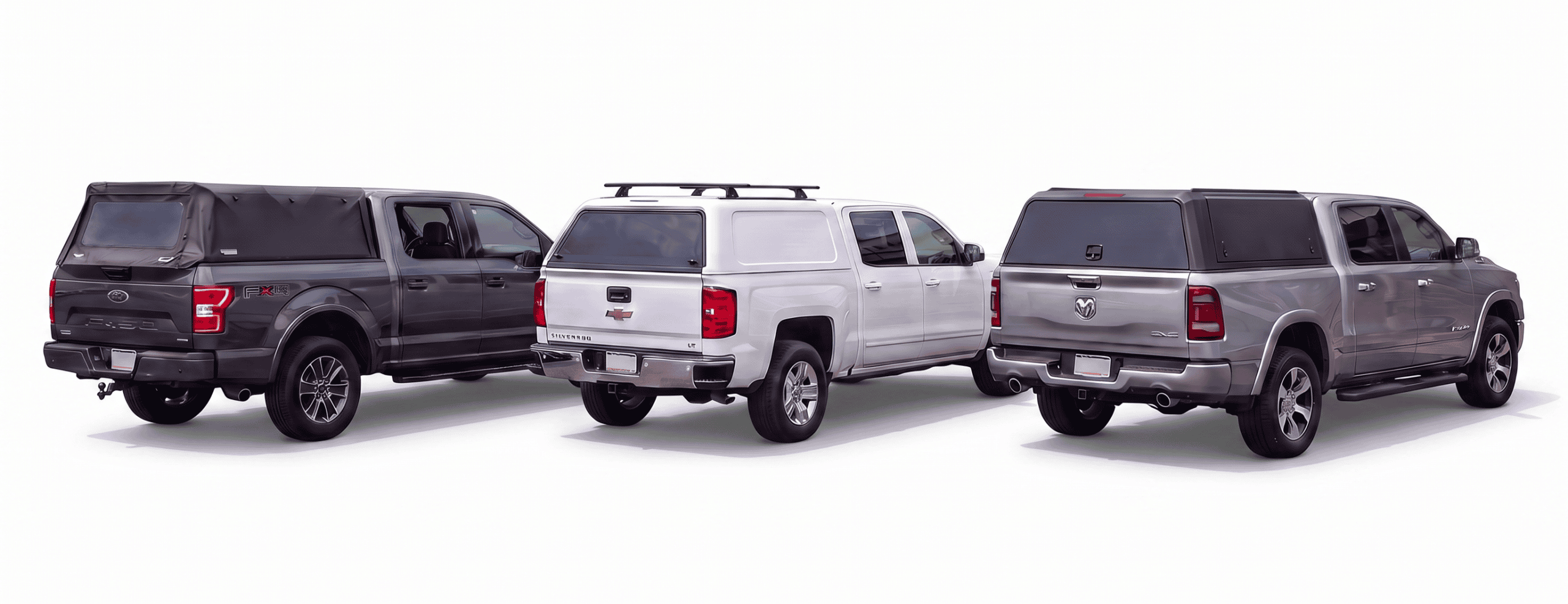
Truck toppers fall into three main categories: hard fiberglass caps, aluminum and modular caps, and soft retractable tops. Hard fiberglass caps offer the best security and paint-matched appearance but weigh 150 pounds or more. Hard fiberglass caps offer the best security and a paint-matched look, but they weigh 150 pounds or more, most people either bring in a few extra hands or opt for professional installation to get them mounted. Aluminum and modular caps are built for rugged use with wing doors and gear mounts but cost several thousand dollars. Soft truck toppers, like a Softopper, weigh 18 to 48 pounds, install in about an hour without drilling, and retract toward the cab for full bed access in seconds.
Type
Materials
Approx. weight
Price range
best for
Hard Fiberglass caps
Fiberglass, paint-matched finish
150 to 250+ lbs
Varies widely
Locked security, seamless look
Aluminum and Modular Caps
Aluminum or steel, powder-coated
100 to 200 lbs
$2,600 to $4,600
Overlanding, roof gear, wing-door access
Soft and Retractable Tops
Vinyl or twill fabric, anodized aluminum frame
18 to 48 lbs
$1,000 to $1,300
Everyday hauling, quick full-bed access
Hard Fiberglass Caps
Hard fiberglass caps (brands like LEER, A.R.E., and SnugTop) deliver a factory-matched appearance and the strongest theft deterrent. They lock securely and seal tightly against weather. The tradeoff is weight: most weigh well over 150 pounds, which typically means a two-person lift and professional installation. Removal is not a quick job, so fiberglass caps make the most sense if you rarely need a fully open bed.
Aluminum and Modular Caps
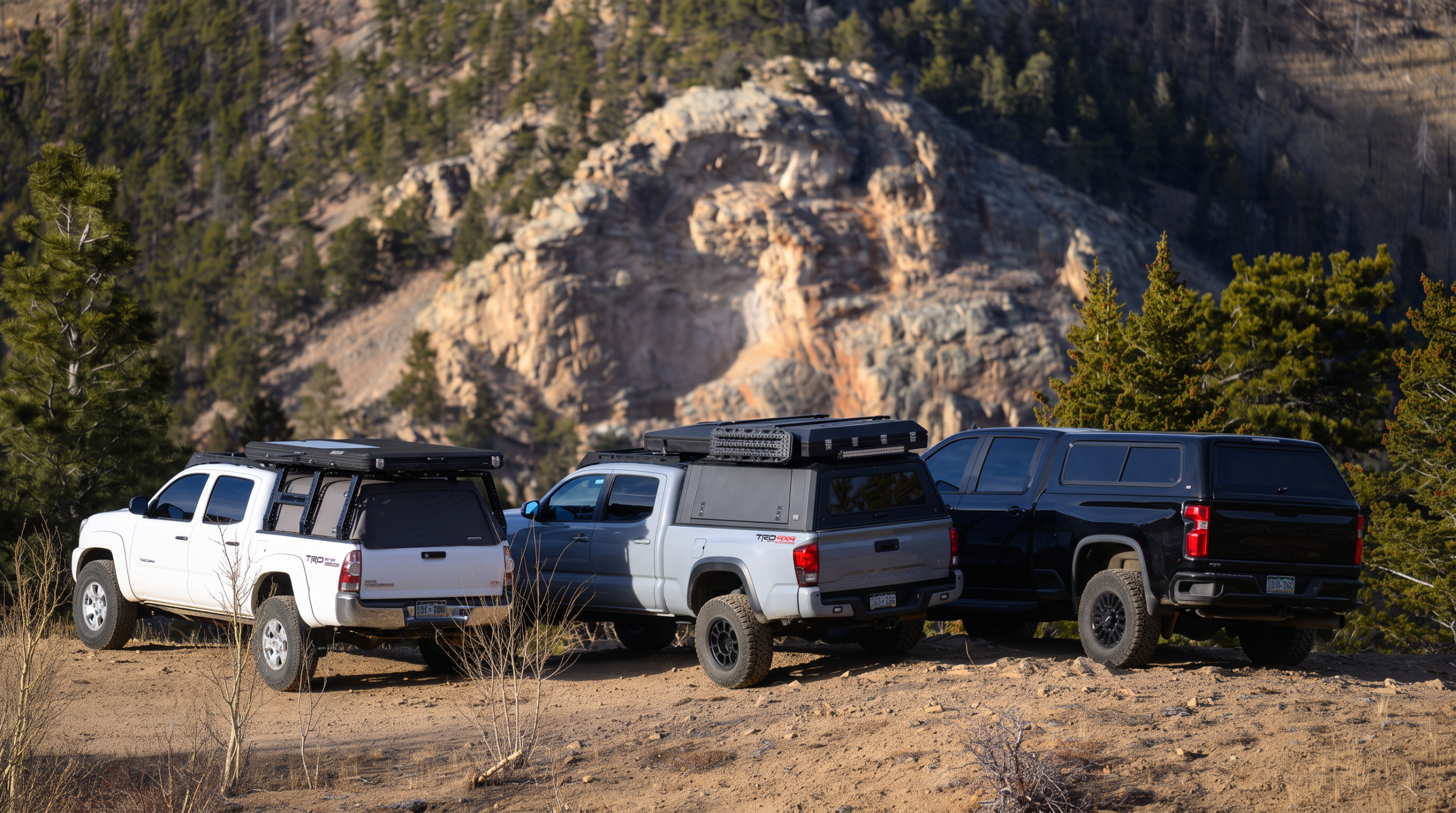
Aluminum and modular caps (like RSI SmartCap or GFC Platform Camper) appeal to overlanders and gear-heavy users. They support roof-top tents, awnings, and accessory mounts. Wing doors on some models give side access without lifting a rear hatch. These caps are lighter than fiberglass but still heavy enough to require help, and they cost several thousand dollars. If your priority is building out an expedition rig, this category delivers flexibility, but it locks you into a permanent setup.
Soft and Retractable Tops
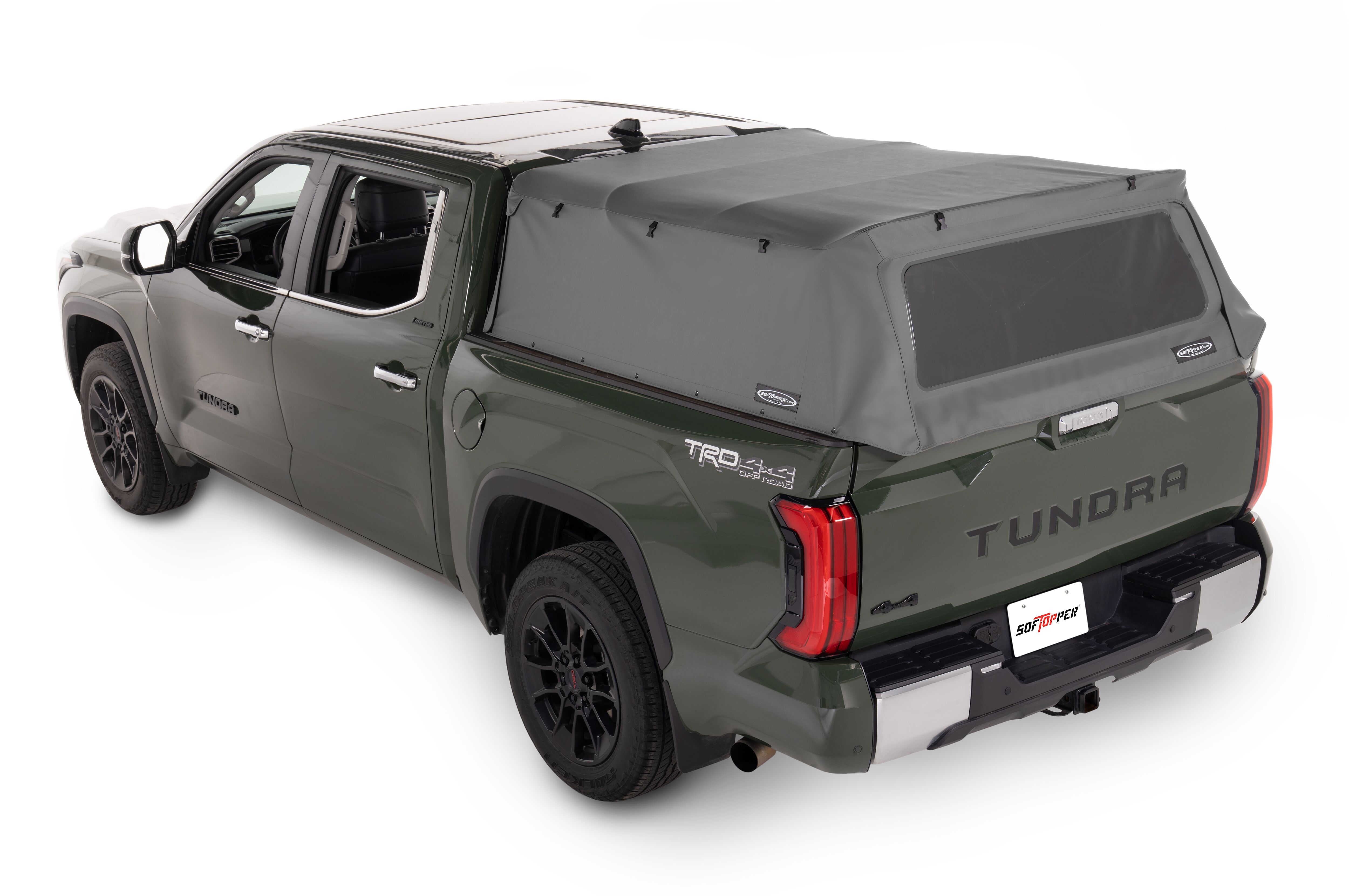
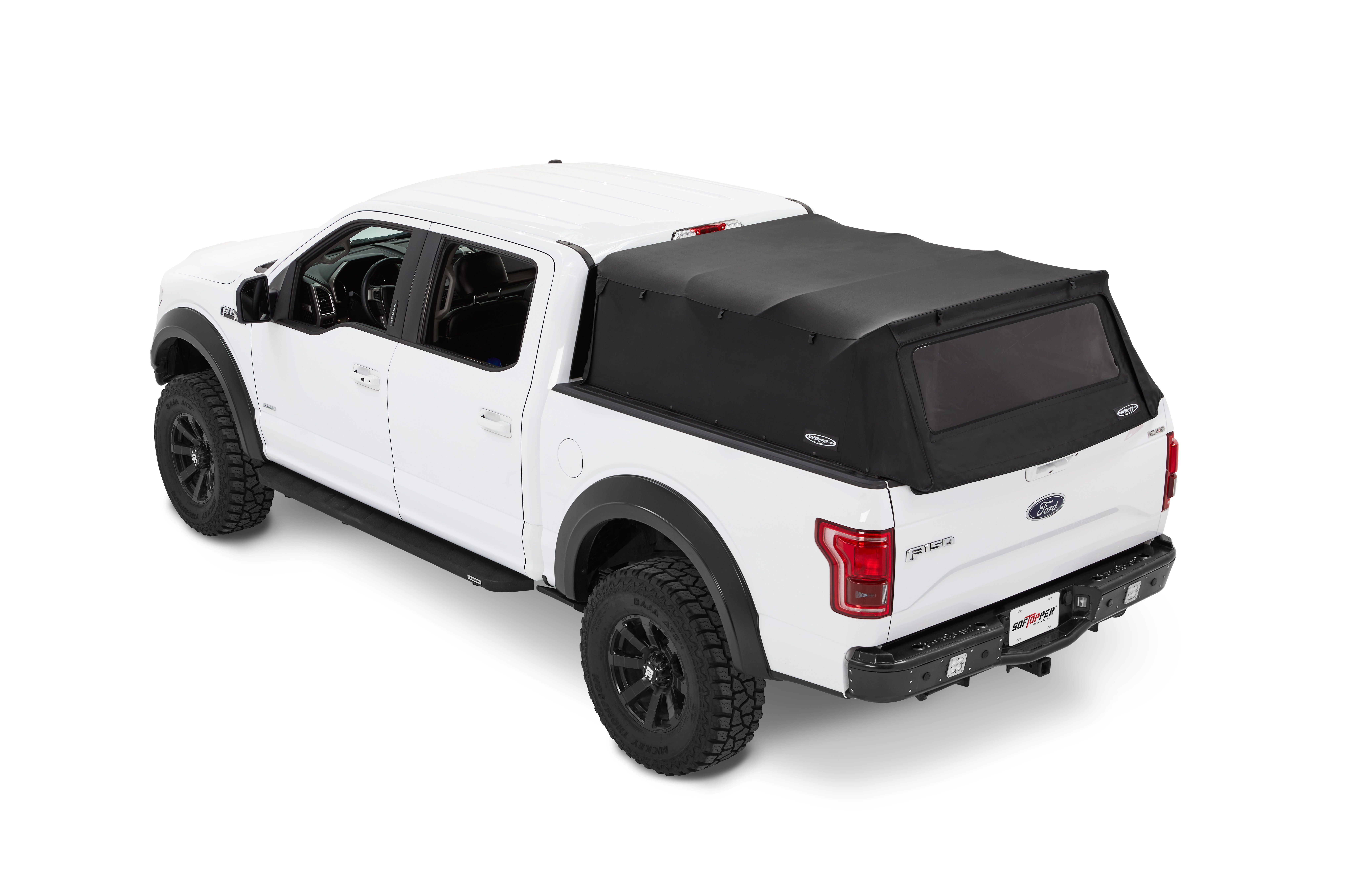
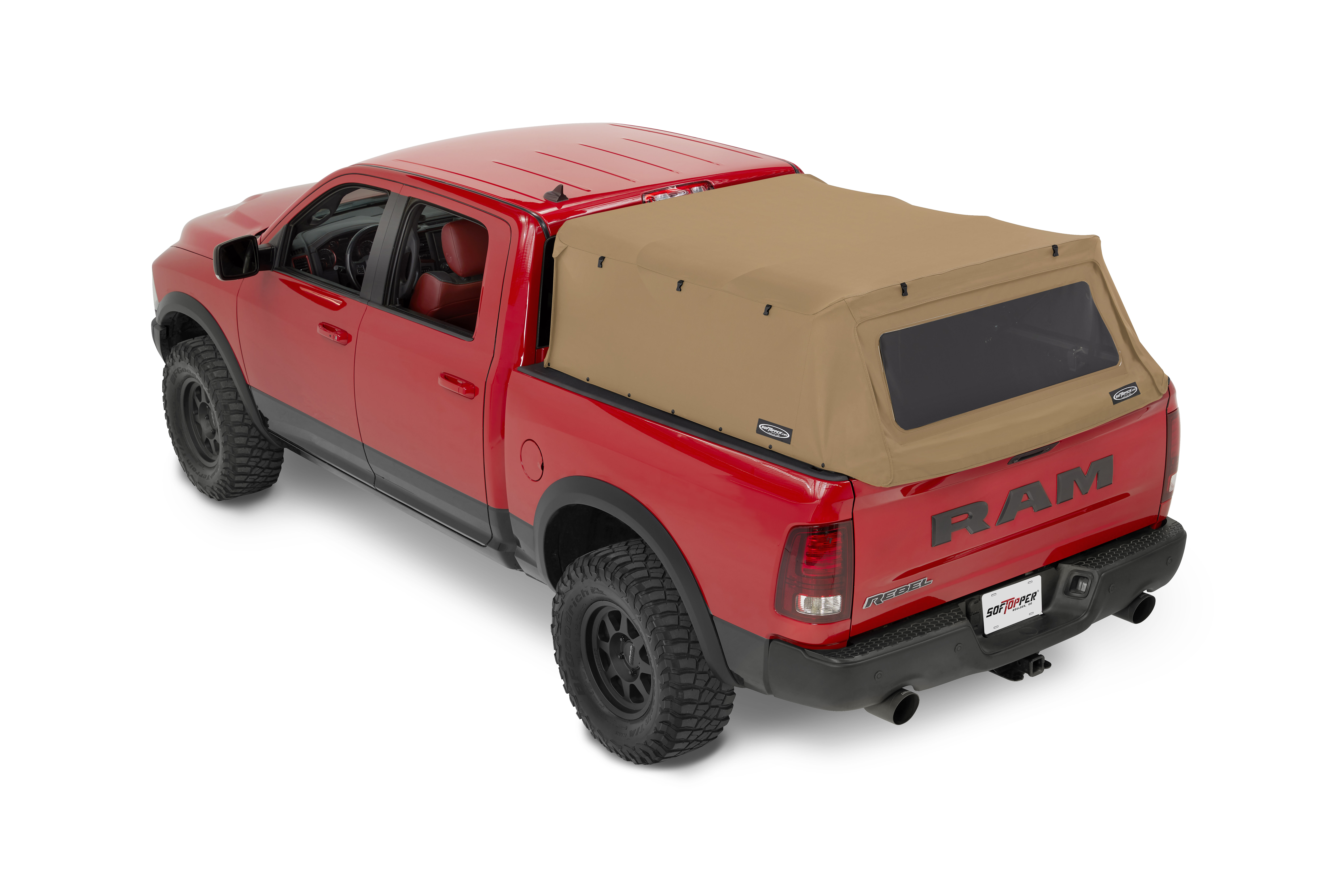
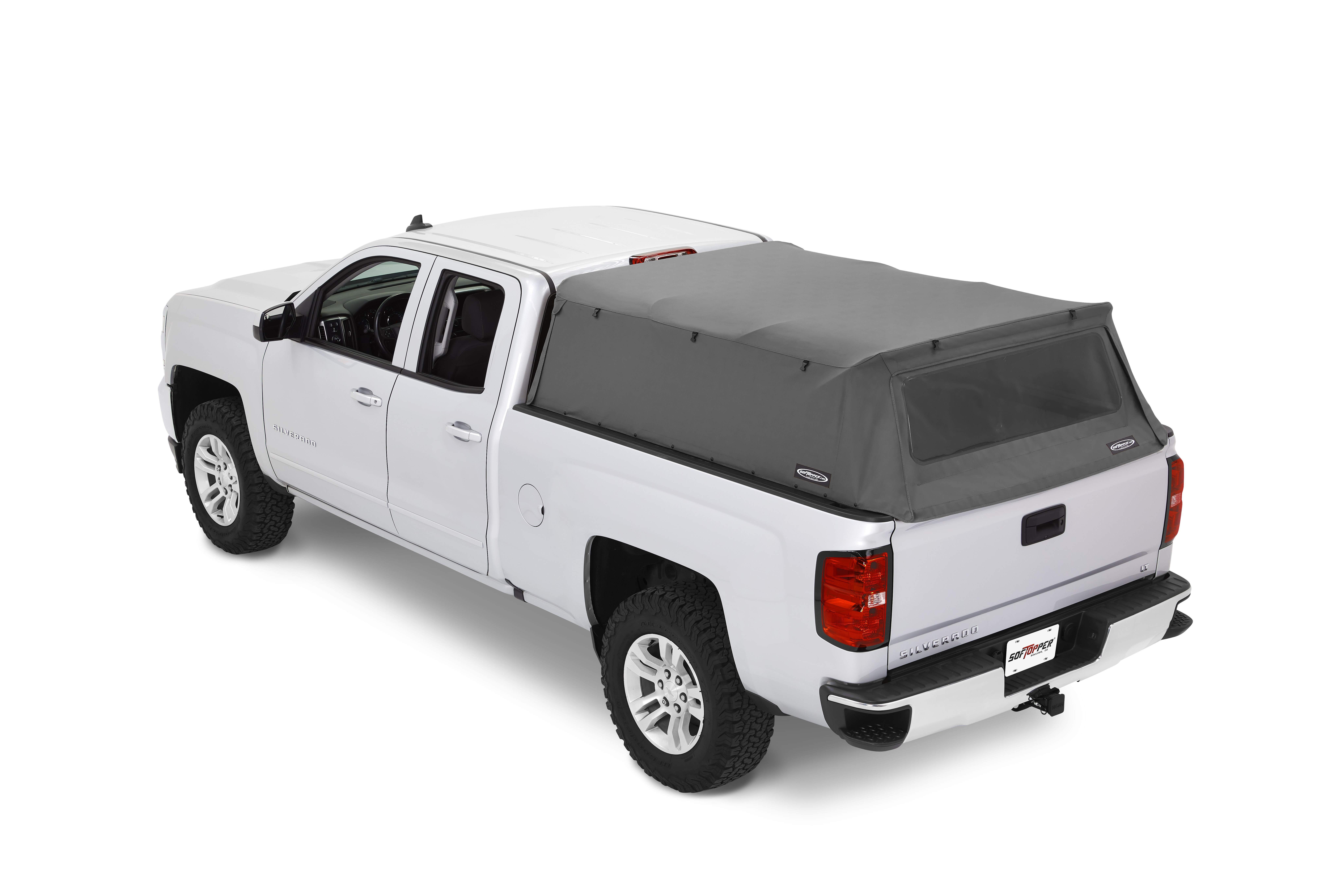
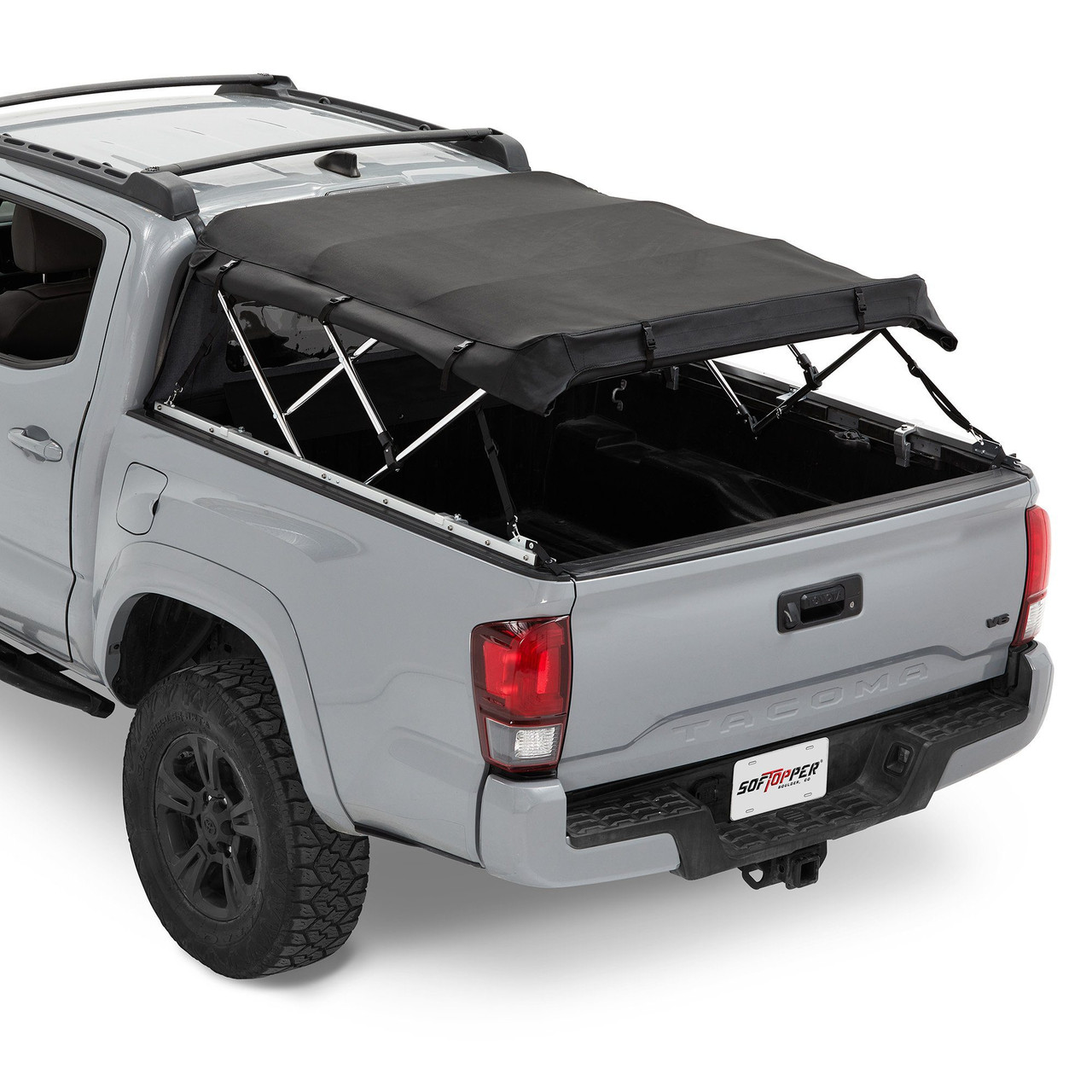
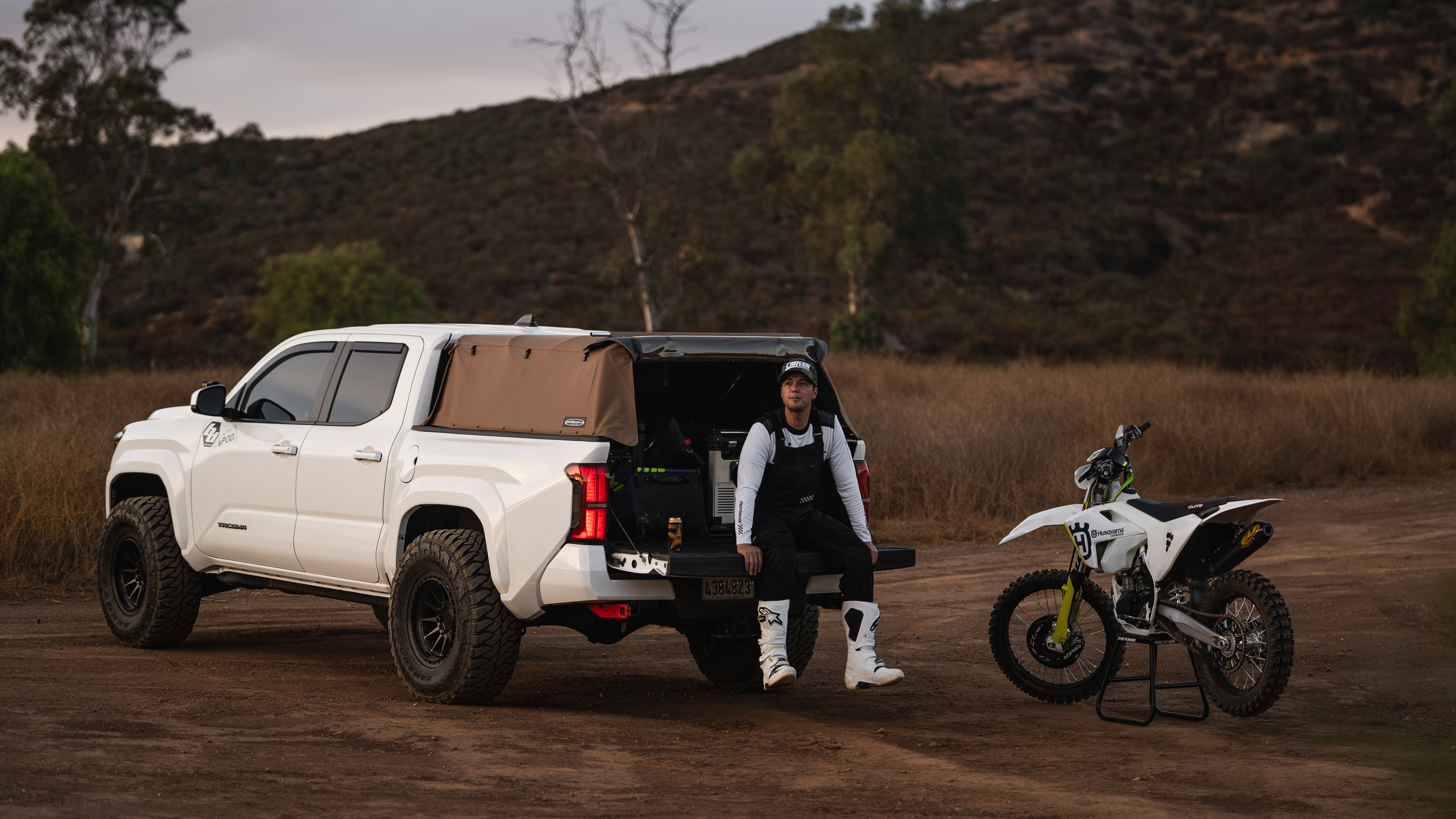
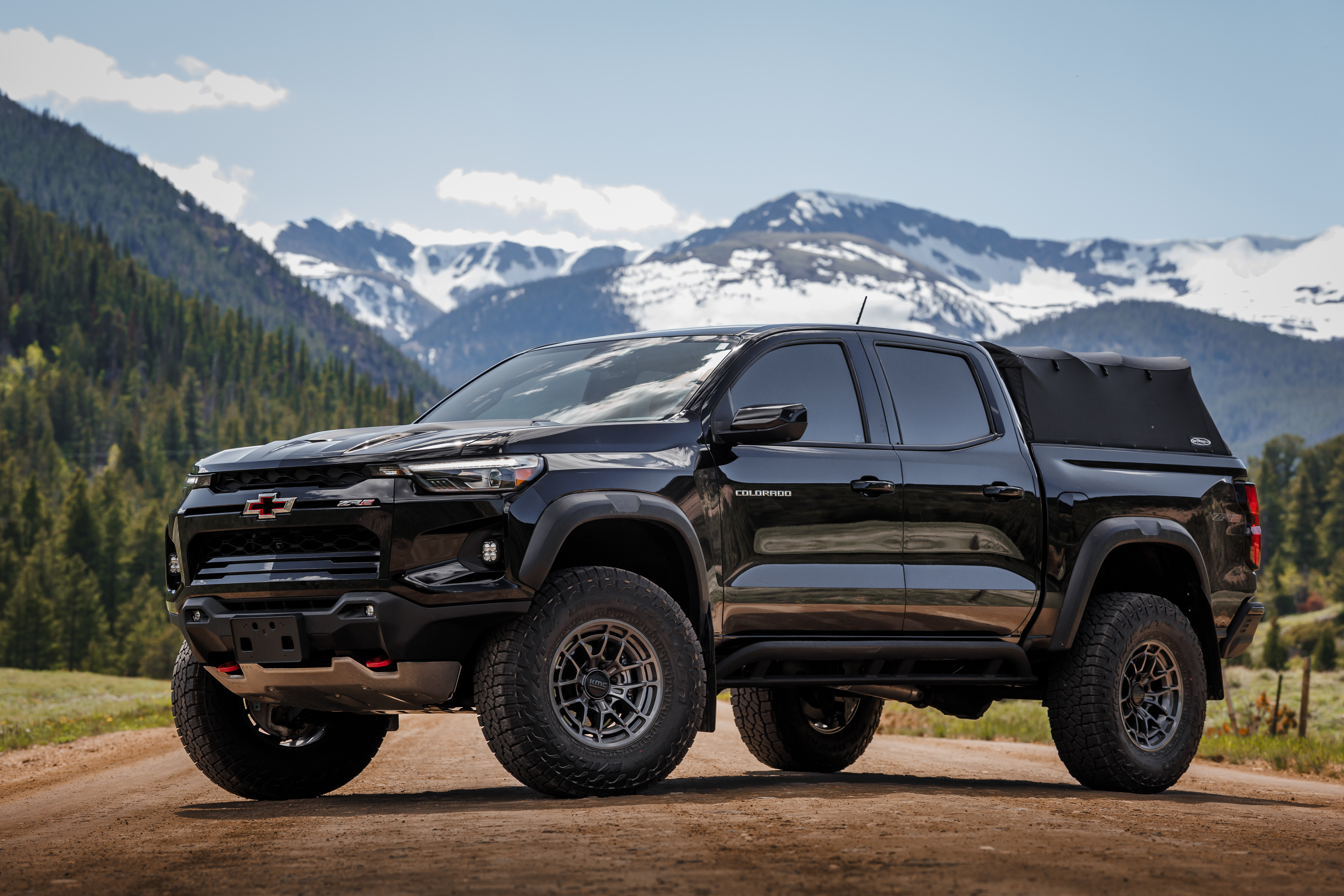
Soft truck toppers trade hard-shell security for low weight, fast access, and no permanent commitment. A Softopper, for example, uses a corrosion-proof anodized aluminum frame and automotive-grade vinyl or premium twill fabric. It installs with no-drill C-clamps on most models in about an hour, retracts toward the cab in seconds for full bed access, and weighs 18 to 48 pounds depending on your truck. You can remove it by yourself when you need a completely open bed, then reinstall the same day. Browse the full truck soft tops collection to see options by vehicle.
Soft truck tops are not a hard shell on security. They offer weather-resistant protection, but seams can admit water in heavy conditions, and a fabric top will never match a locking fiberglass cap for theft deterrence. The win is practical versatility: covered protection for everyday hauling and a full open bed when a bigger load demands it.
How to Choose the Right Truck Topper
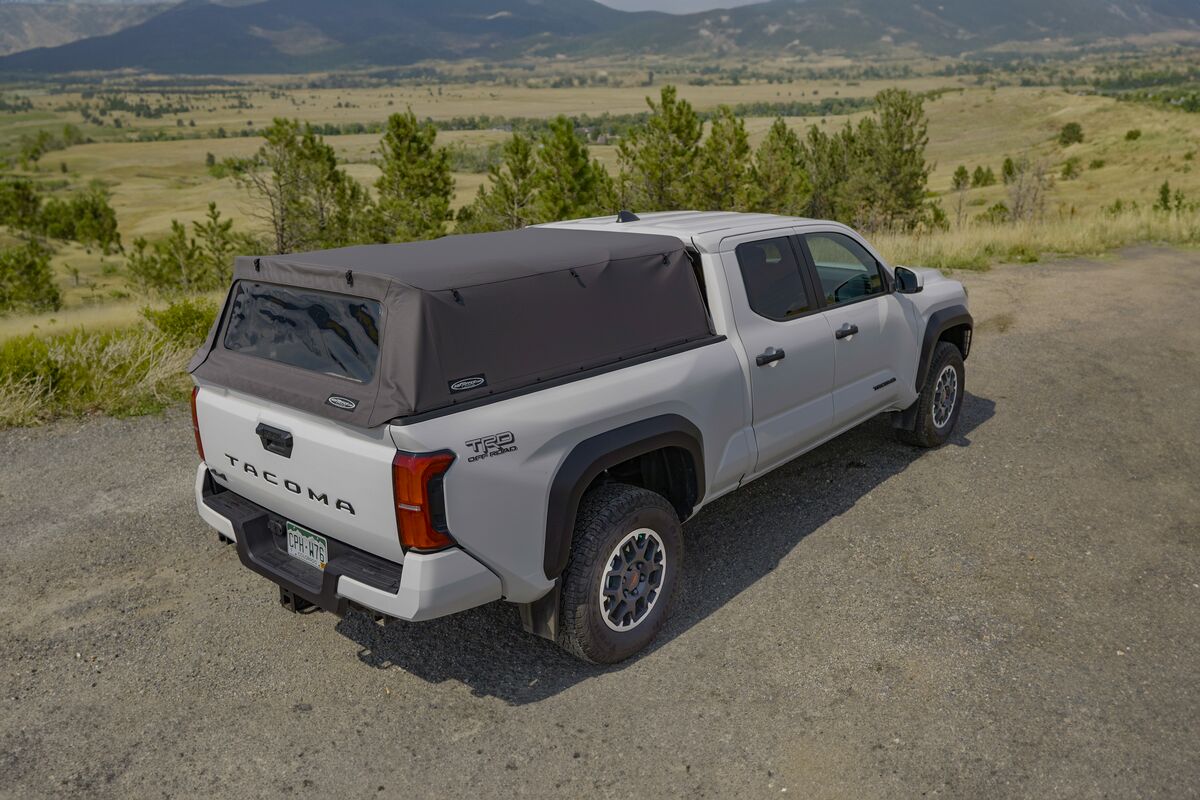
Choosing the right topper starts with how you use your truck. If you need locked, sealed storage for expensive tools, a hard fiberglass cap may justify its weight and cost. If you need to shift between covered cargo and full-bed hauling on the same day, a soft retractable top offers the flexibility hard caps cannot — and if security is still a priority, pairing a soft truck top with an aftermarket lock box gives you secured storage for valuables while keeping the rest of the bed open and versatile.. Run through the factors below to narrow your options.
Fit and Vehicle Compatibility
A topper must match your exact truck: make, model, year, and bed length. Generic “universal” fits rarely seal properly or look right. Softopper truck tops are engineered for a specific truck’s bed dimensions and rail profile — whether that’s a Softopper for the Toyota Tacoma, a Ford F-150 soft truck top, or any other model in the lineup — which is why fitment matters as much as materials.
Materials and Weather Protection
Hard caps use fiberglass or aluminum with rubber seals. Soft truck tops use coated fabric stretched over an aluminum frame. Standard vinyl (2-ply PVC-coated sailcloth) is waterproof as a fabric and resists UV and mildew. Premium twill (triple-layer, 33% woven acrylic) adds insulation and a richer, more refined look and feel.. The frame should be corrosion-proof (anodized aluminum is the standard for soft truck tops). Read more about the benefits of a twill soft top if you want added durability and a refined look.
Be realistic about weather sealing. A soft top is weather-resistant, not waterproof as a system: seams can leak in hard rain, and seam sealer is available for trouble spots. If you need watertight cargo protection in all conditions, a hard cap or sealed tonneau is a better match.
Weight and Installation
Weight affects what you can lift alone and how your truck handles. Fiberglass caps commonly weigh 150 to 250 pounds, requiring two people and often professional mounting. Soft truck toppers weigh 18 to 48 pounds and install with no-drill C-clamps (on most models) in about an hour. Some vehicles, like the Honda Ridgeline, use vehicle-specific brackets rather than C-clamps, so check your fitment details. The lighter the topper, the easier it is to remove, reinstall, or store when you need a bare bed.
Security
A locking hard cap with reinforced glass is the most theft-resistant option. Soft tops and retractable covers deter casual theft and hide cargo from view but cannot match a hard shell on physical security. If your priority is protecting high-value tools overnight at a jobsite, factor that honestly into your decision — though pairing a soft truck top with an aftermarket lock box is a popular way to add secured storage for valuables while still keeping the flexibility of the retractable design.. If you need covered protection for everyday cargo but do not require a vault, a soft top delivers flexibility a hard cap cannot.
Price and Value
Truck topper prices vary by type, materials, and features. The table below gives a general sense of what each category costs.
Type
Typical price range
notes
Soft and Retractable Tops
$1,000 to $1,300 |
Most affordable; DIY install
Aluminum and Modular Caps
$2,600 to $4,600
Overlanding features add cost
Hard Fiberglass Caps
Varies widely
Paint-matching and options increase price
Soft truck tops cost significantly less than fiberglass or aluminum caps, and no-drill install saves labor fees. If you want to upgrade your Tacoma– or any other truck – with multiple accessories over time, starting with a soft truck top keeps budget available for other gear.
When a Soft Truck Topper Makes the Most Sense
A soft truck topper fits drivers who need everyday covered protection but also need full bed access regularly. If you pick up lumber, furniture, or bulky loads a few times a month, a retractable soft truck top folds toward the cab in seconds so you can load without obstruction, then snaps back into place for the drive home. Hard caps require removal or limit what you can carry.
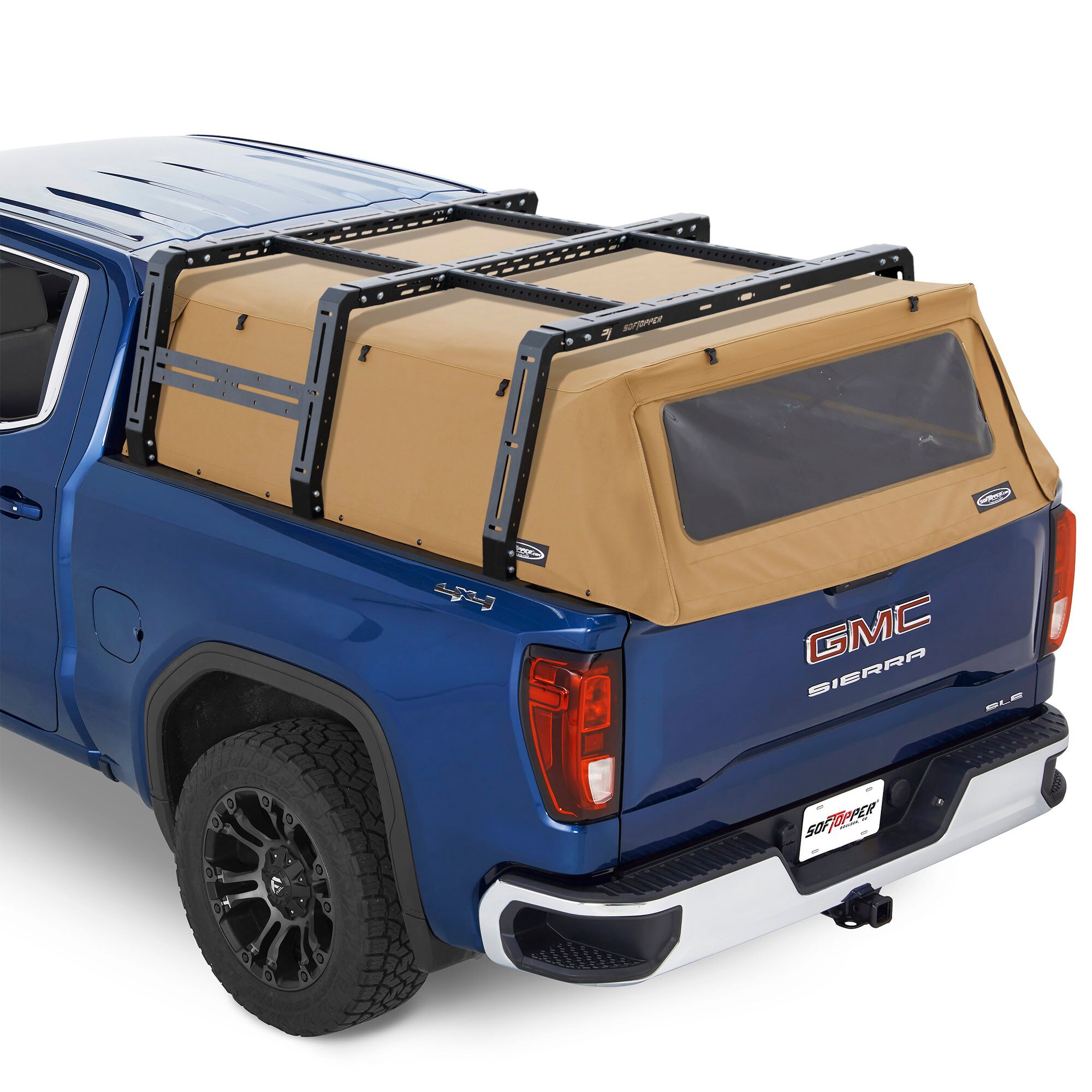
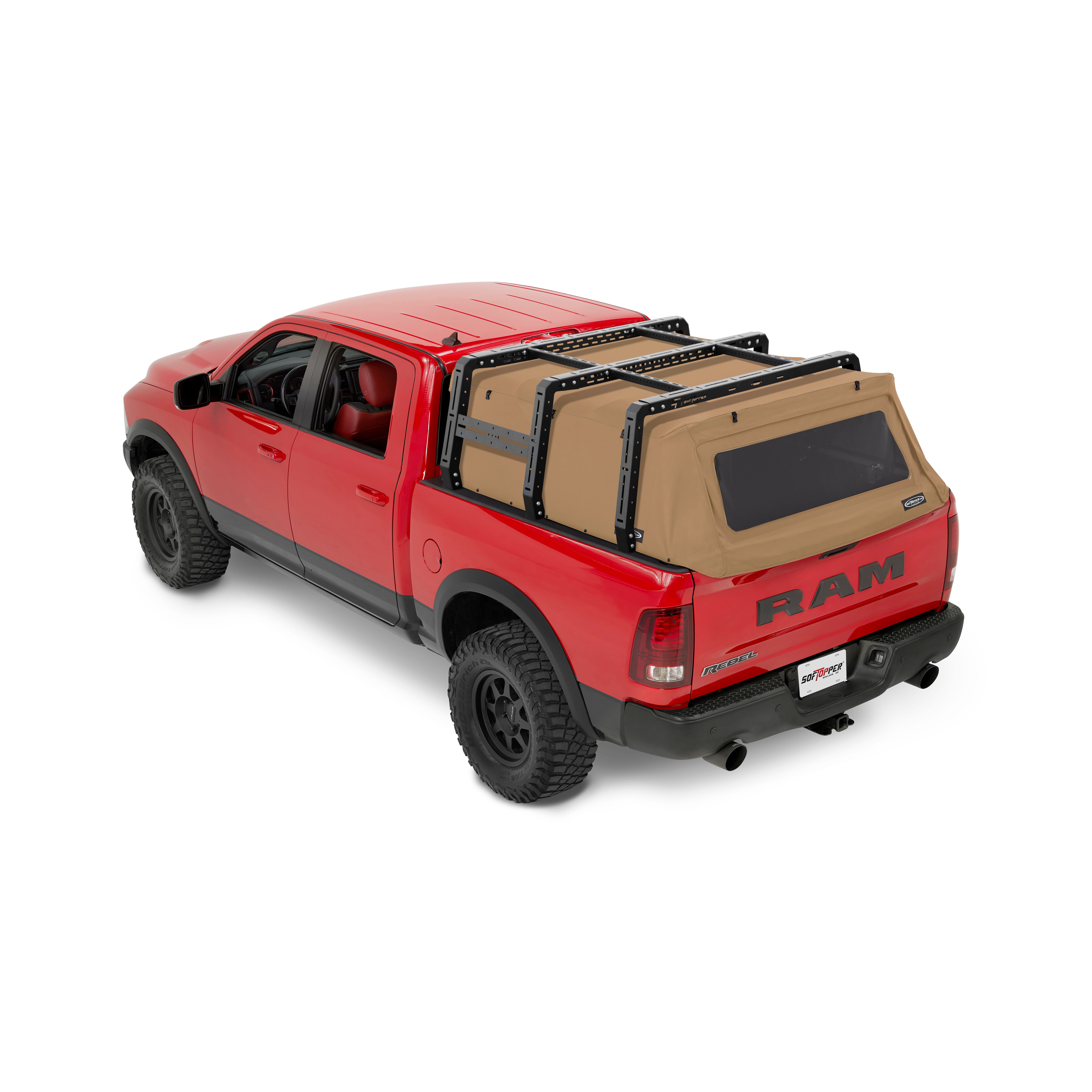
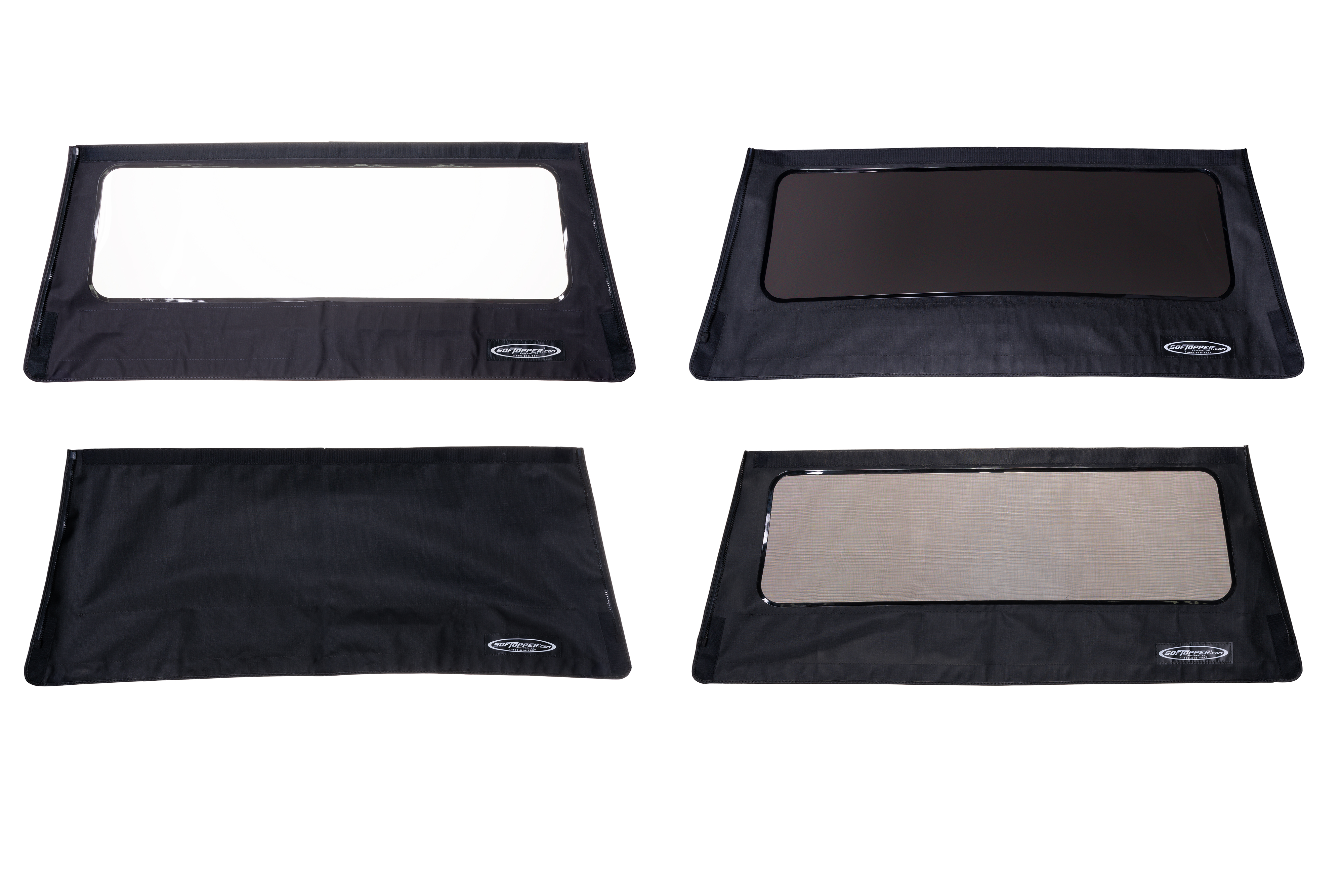
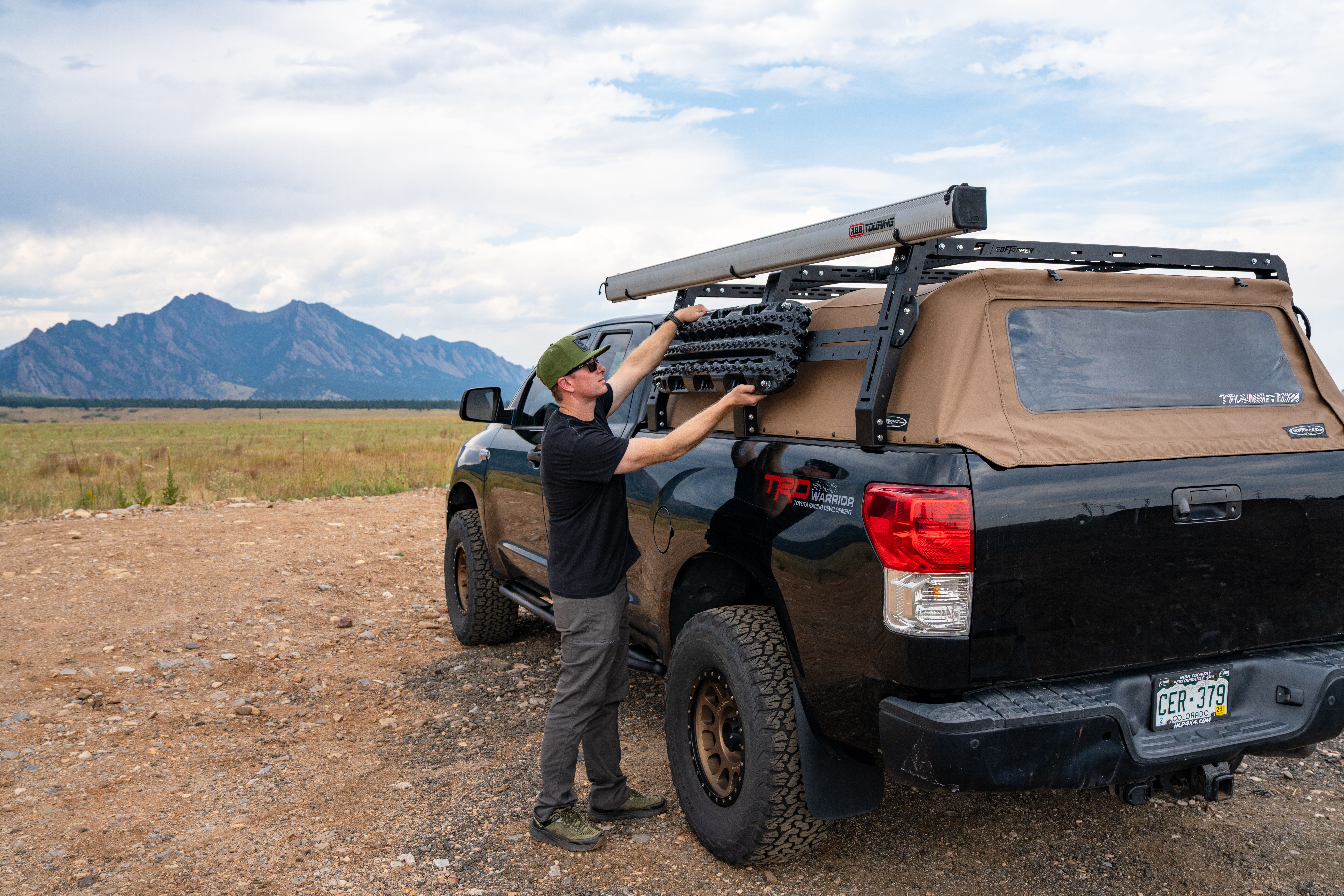
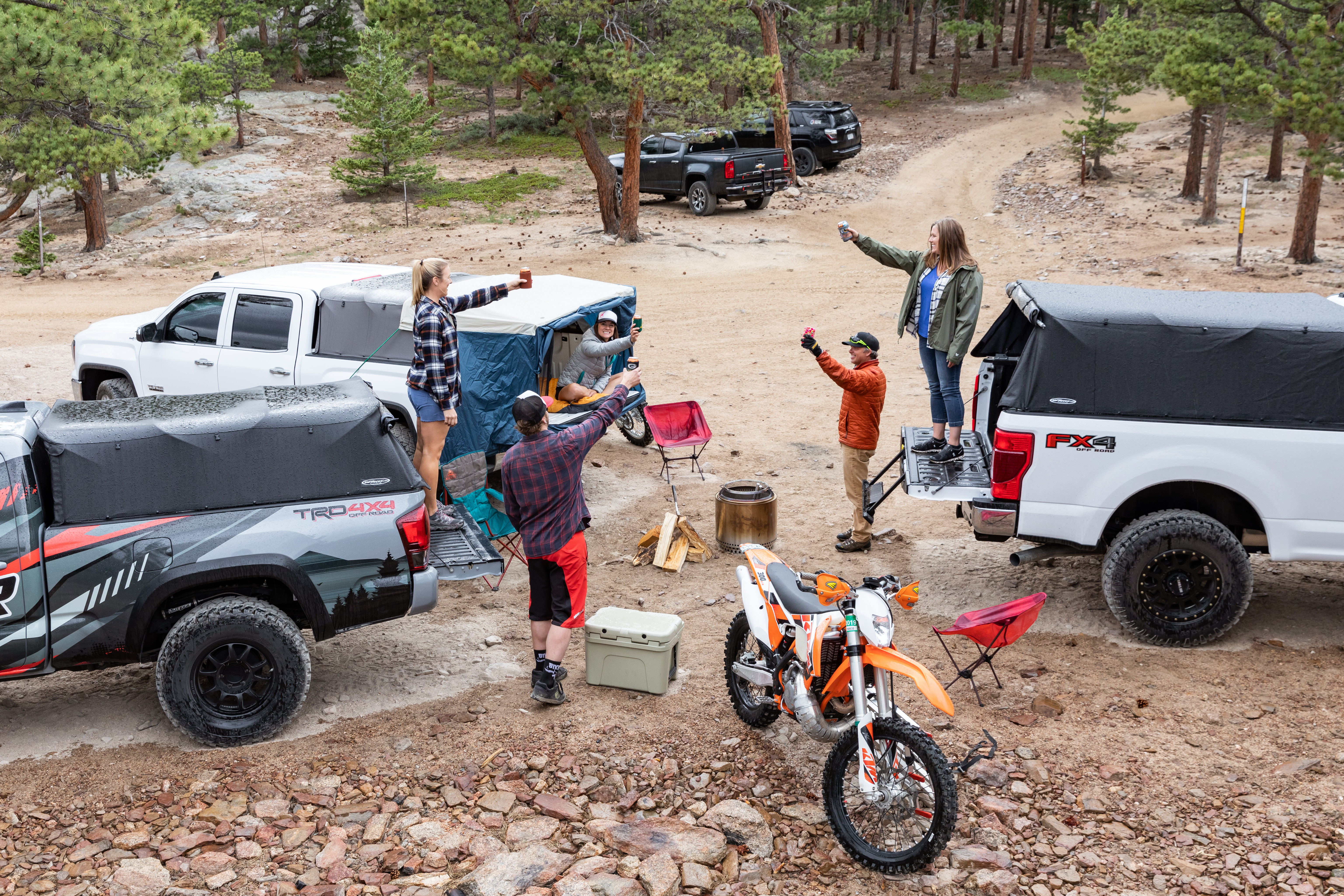
Soft truck tops also make sense for bed camping and weekend adventure use. You get cab-high cargo height for sleeping pads or cots, coolers, and gear, plus interchangeable window panels (clear, tinted, mesh, or solid) that let you dial in airflow, privacy, and visibility. If you add a bed rack for a roof-top tent or awning, Softopper-compatible bed racks (like the Exo Truck Bed Rack) are engineered to work with the top snapped, in Safari Mode, or fully retracted.
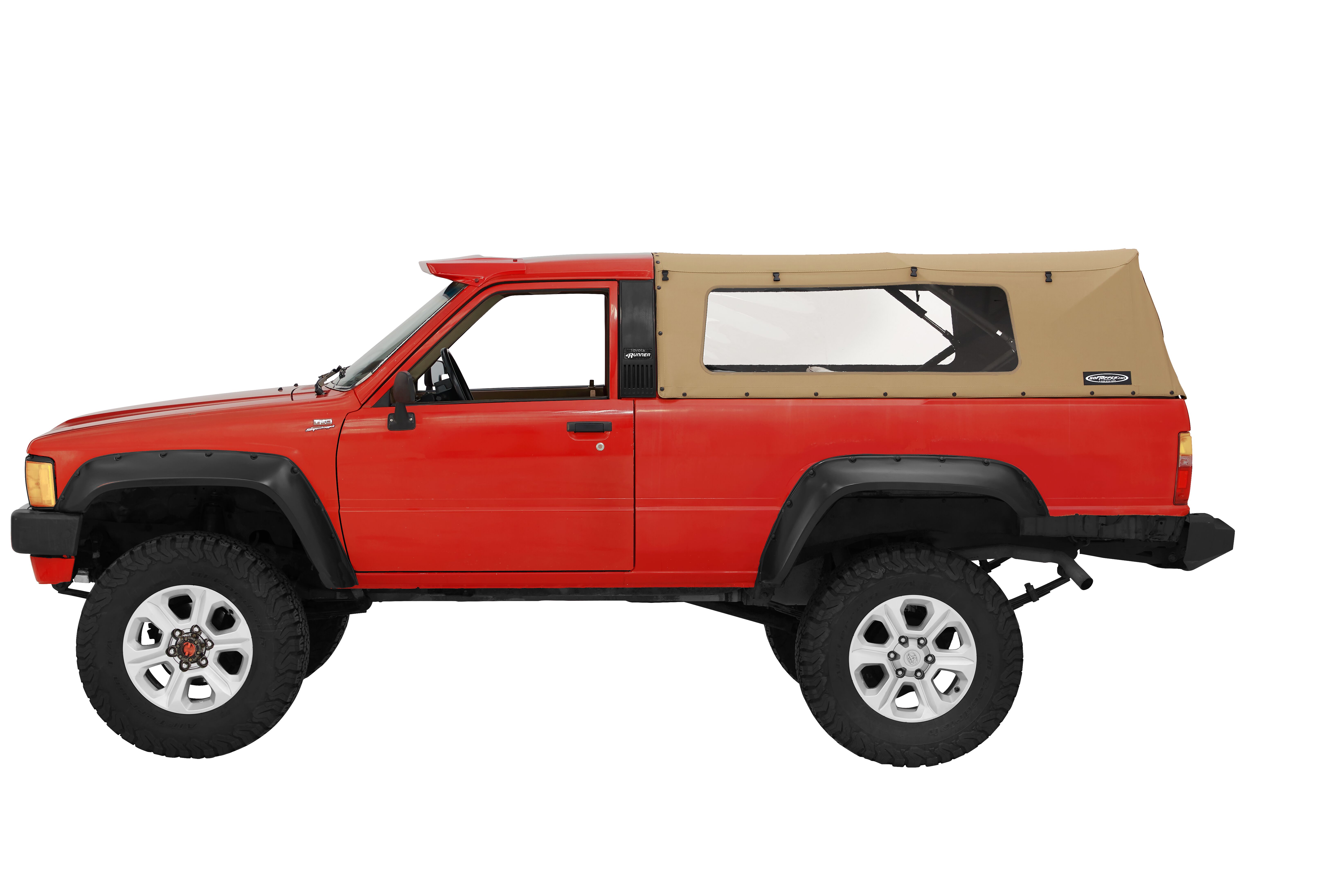
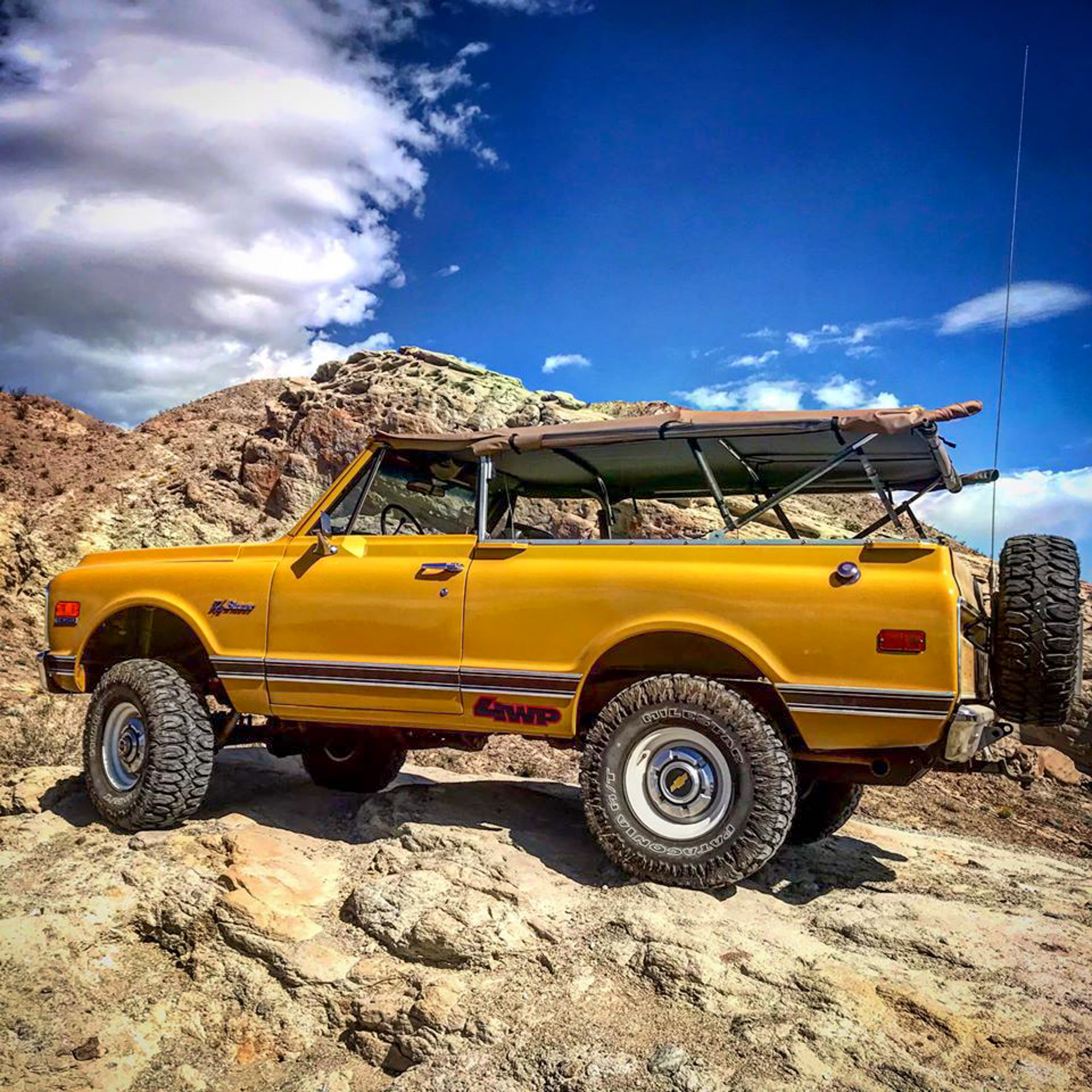
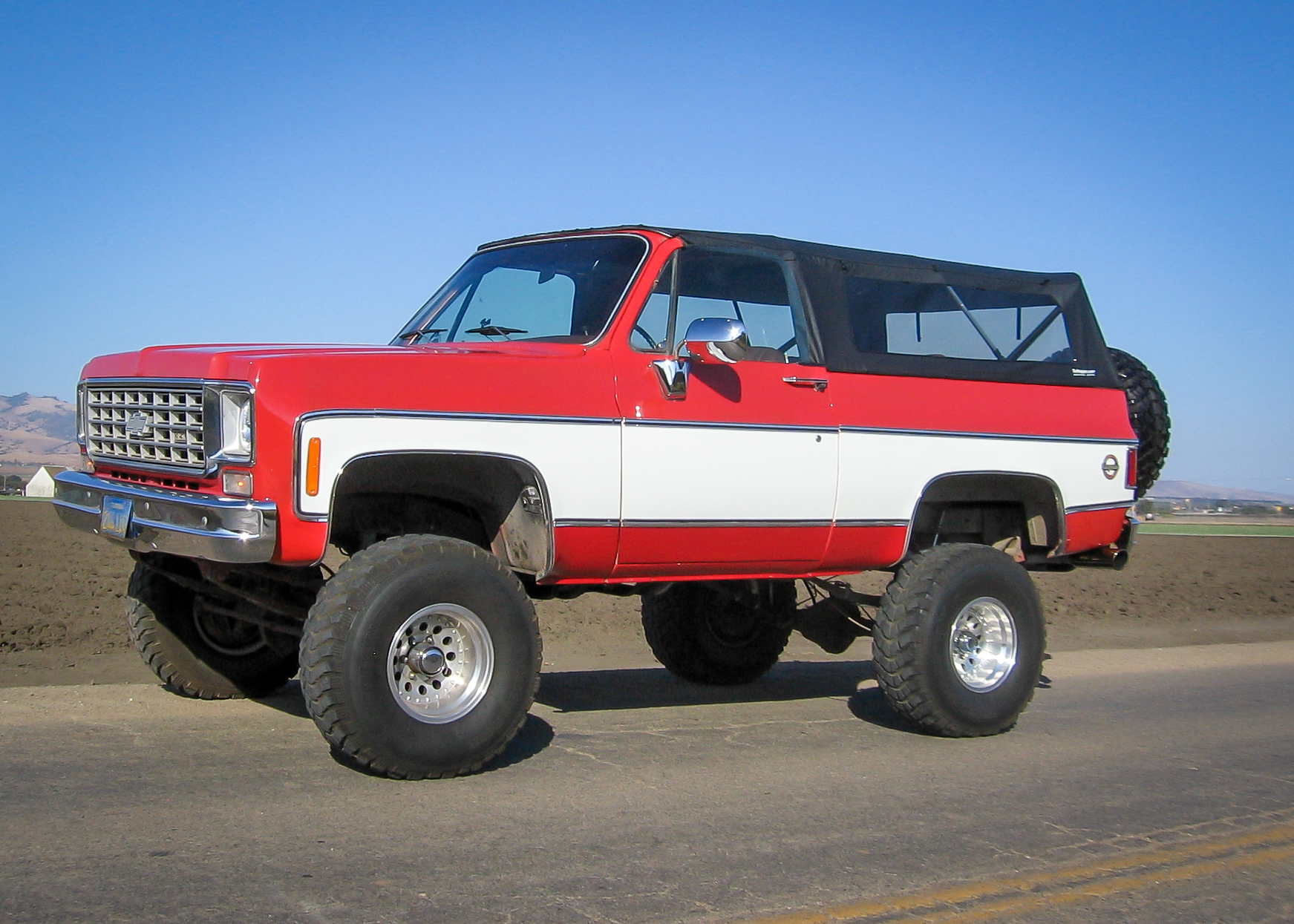
If you drive a classic removable-top SUV (Ford Bronco, Scout II, early Blazer, first-gen 4Runner), Softopper also builds classic SUV soft tops as complete replacement kits.
Which Trucks Can Get a Softopper?
Softopper covers more than 50 vehicle-specific fitments across every major truck platform, from the Ford Maverick up to the 8-ft-bed Super Duty. Popular fits include the Toyota Tacoma, Ford F-150, Chevy Silverado and GMC Sierra, and Ram 1500, plus the Tundra, Colorado/Canyon, Gladiator, and Bronco.The brand has been building vehicle-specific soft tops for roughly 26 years.
To find the right fit, browse the truck soft tops collection and filter by your make, model, year, and bed length. Each listing shows compatibility, available fabric and window options, and what is included.
Find the Right Fit for Your Truck
A truck bed topper is one of the most practical upgrades you can make, and the best choice depends on how you actually use your truck. If you want covered protection for everyday hauling, quick full-bed access when bigger loads call for it, and a lightweight design you can install and remove yourself, explore the truck soft tops collection to find the Softopper that fits your truck.
Frequently Asked Questions About Truck Toppers
A truck topper (also called a cap or camper shell) is a cover that encloses an open pickup bed to protect cargo from rain, sun, dust, and theft. Toppers come in three main types: hard fiberglass caps, aluminum or modular caps, and lightweight soft tops like the Softopper that retract toward the cab for full bed access.
Price depends on the type. Soft, retractable tops are the most affordable, typically in the low four figures. Aluminum and modular caps generally run several thousand dollars, and premium paint-matched fiberglass caps can cost the most. A soft truck top like the Softopper delivers covered bed protection at the lower end of that range.
Yes, for most owners. A topper protects tools, gear, and cargo from weather and prying eyes, adds security over an open bed, and can improve comfort for bed camping. A retractable soft truck top adds a further benefit: it folds toward the cab in seconds, so you keep full open-bed capability when a larger load calls for it.
A locking hard cap offers the most theft resistance, and a soft truck top does not match a hard shell on security or weather sealing. A Softopper still improves on an open bed with covered, out-of-sight storage and lockable-tailgate compatibility, while winning on versatility, low weight, and no-drill install instead of lockdown equivalence.
A Softopper is lightweight, roughly 18 to 48 pounds depending on fitment, so one person can lift or remove it and it has minimal impact on payload. Hard fiberglass caps, by contrast, commonly weigh well over a hundred and fifty pounds and usually require multiple people or a hoist to install or remove.
Not always. Most Softopper models install with no-drill C-clamps that attach to the bed rails in about an hour, with no permanent modification to your truck. Some vehicles use vehicle-specific brackets instead of C-clamps, so confirm the mounting method for your make and model before ordering.
Softopper builds vehicle-specific soft tops for more than 50 fitments, including Ram 1500/2500/3500, Ford F-150, Chevy Silverado and GMC Sierra 1500, Toyota Tacoma and Tundra, Jeep Gladiator, and more. Each top is engineered for its bed, so you select your exact truck to get the correct fit.
A tonneau cover sits flat across the bed rails and covers cargo at bed height, limiting load height. A topper encloses the full bed at cab height, giving you standing-height covered space for tall gear, tools, or bed camping. A Softopper delivers that cab-high coverage while still folding down for an open bed.