











.jpg)

.jpg)
.jpg)
.jpg)
.jpg)

.jpg)


Key Takeaways
- Rain, road spray, and gaps around the bed all let water reach your gear, so pair a cover with sealed bins, dry bags, and something that lifts gear off the floor.
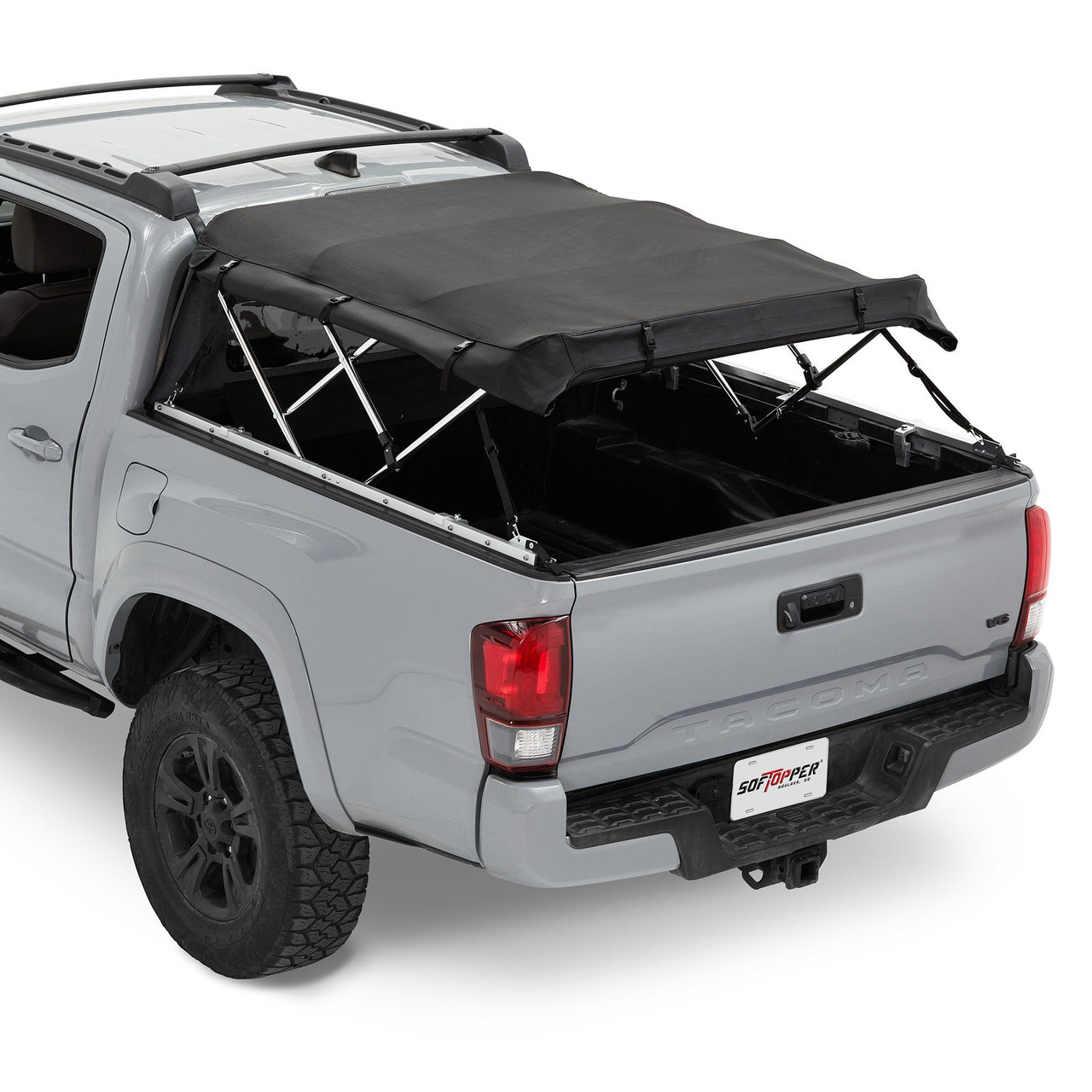
- A soft truck top won’t seal or lock like a hard shell, but it gives you cab-high covered space and retracts toward the cab in seconds when you need the whole bed.
- To keep gear from turning damp and musty, prioritize airflow: swap in a mesh panel or roll up into Safari Mode, and on cold nights unzip a solid panel just a crack.
- Pack by when you’ll need things, with heavy gear strapped down first, then use overhead pockets for small items and a lock box for valuables you plan to leave overnight.
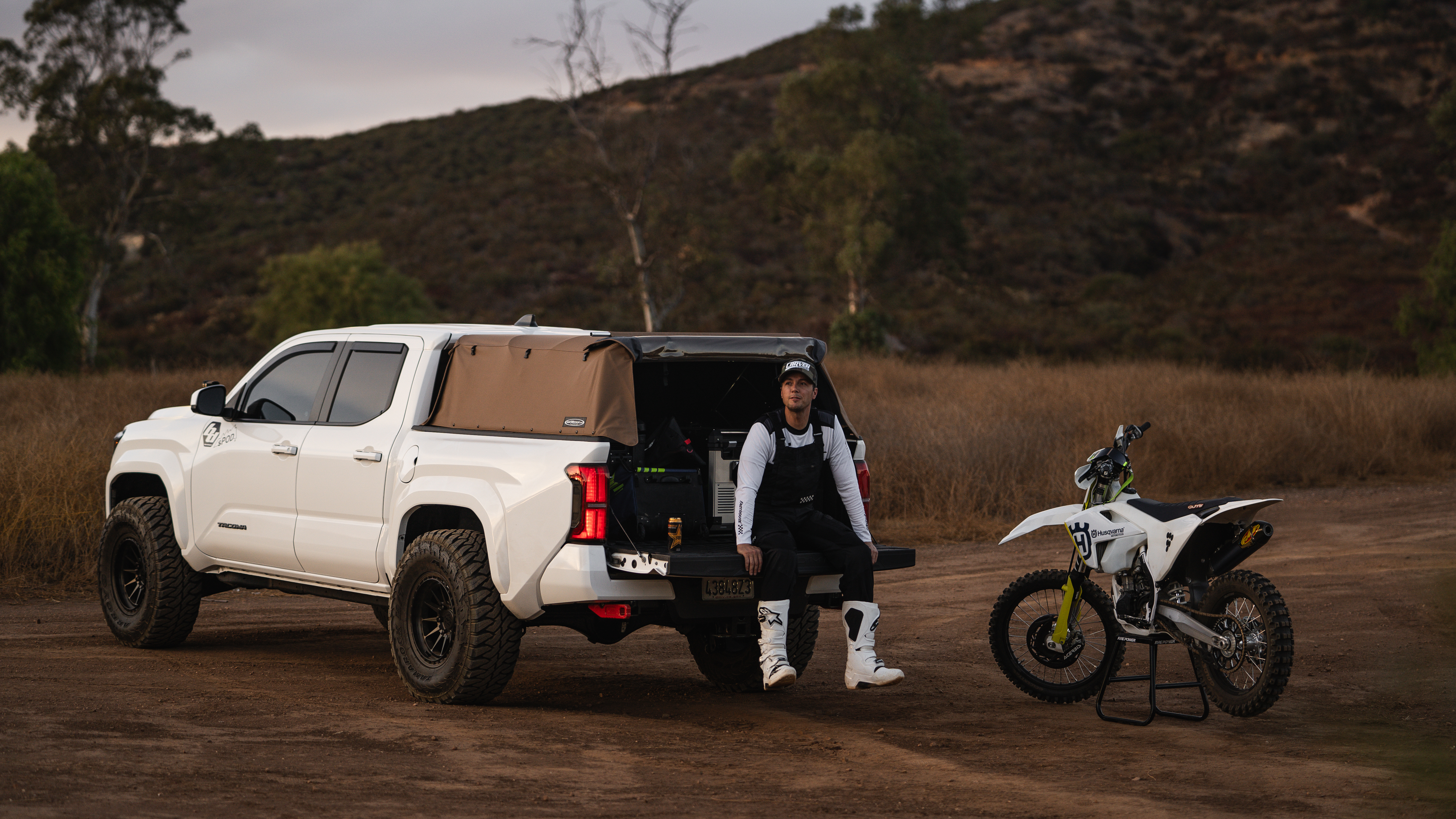
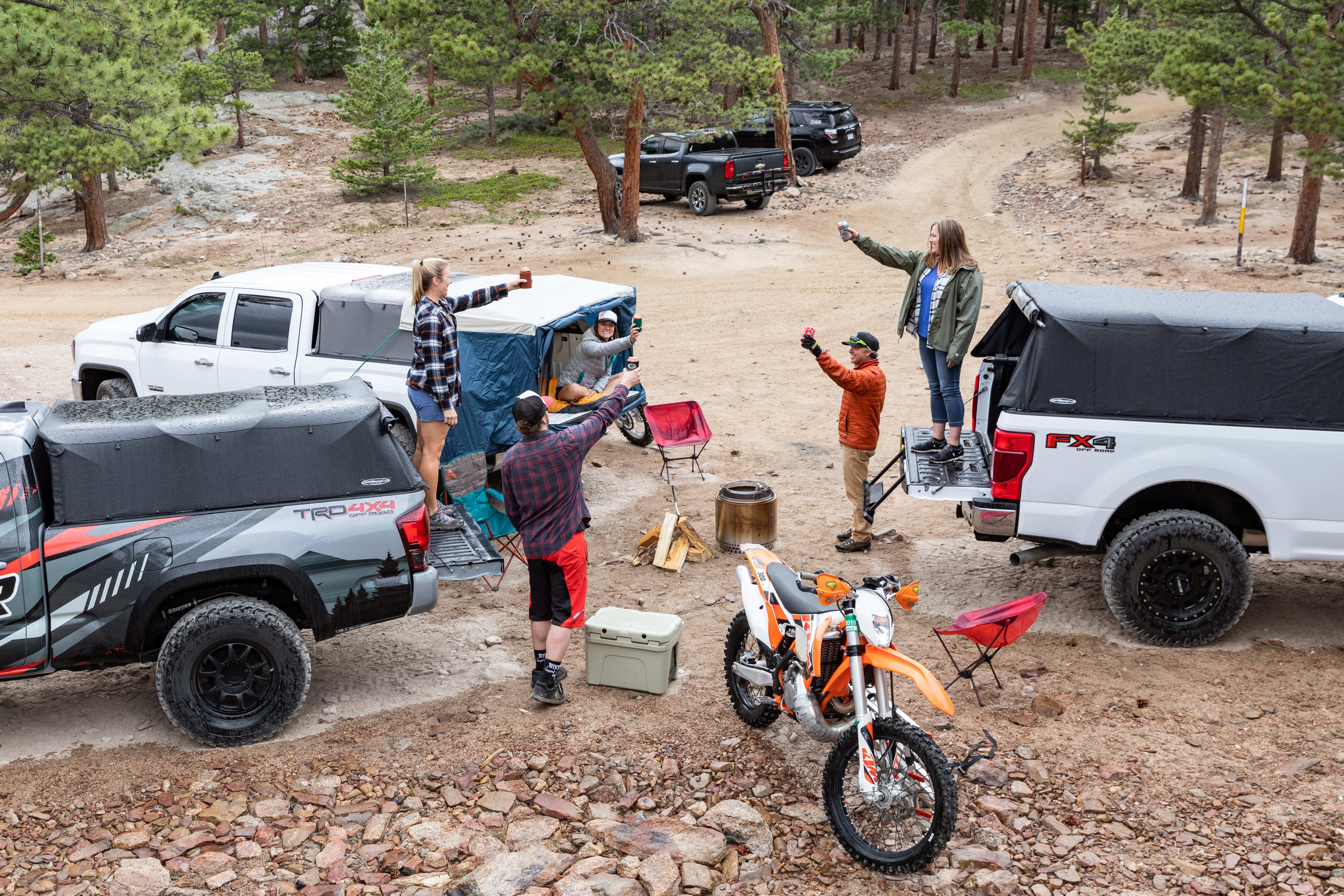
A truck should stay a truck. On Saturday morning that means an open bed for bikes and firewood. On Saturday night it means covered space for the tent, cooler, and sleeping bags when the forecast turns.
Keeping your gear dry, organized and protected for weekend adventures comes down to a few simple layers stacked together. This guide covers how water gets in, how to seal your truck bed, and how to pack for camp. You’ll also get truck bed storage ideas that work with the bed covered or open, plus a weekend packing checklist.
Why Gear Gets Wet in an Open Truck Bed
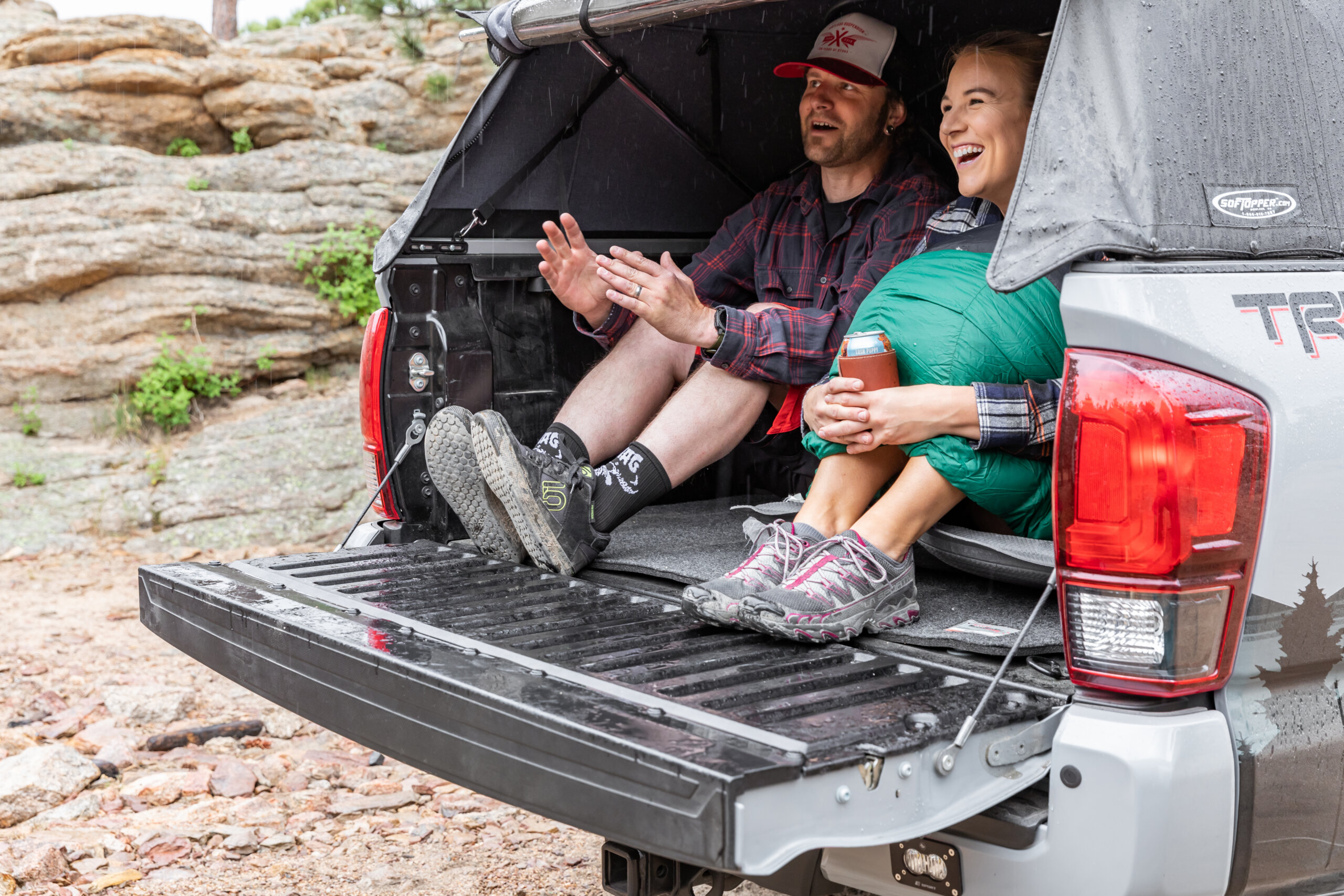
Anything sitting in an open truck bed is exposed to the weather. Rain falls straight in, spray kicks up from the road, and water sits on the bed floor until it drains. If your gear is going to stay dry, it needs a cover overhead and protection underneath.
Water reaches your gear in a few predictable ways:
- Rain falling straight into the open bed
- Road spray at highway speed
- Puddles on the bed floor before they drain
- Gaps where a cover meets the bed rails or tailgate
- Condensation from wet gear and cool nights
How to Keep Gear Dry in a Truck Bed: Six Layers of Protection
To keep gear dry in a truck bed, stack six layers of protection. Cover the bed, seal the seams and rails, pack gear in bins and dry bags, and lift it off the floor. Then strap everything down and keep air moving, and together the layers handle rain, road spray, and damp nights at camp.
- Cover the bed.
- Seal the seams.
- Contain gear in bins and dry bags.
- Get it off the bed floor.
- Secure everything so it can’t shift.
- Keep air moving to beat condensation.
Cover the Bed
The cover is your first layer, and the one you pick decides how much you can carry and how fast you can reach it. A tarp works in a pinch. At highway speed, though, it has to be tucked tight or it parachutes and lets water in.
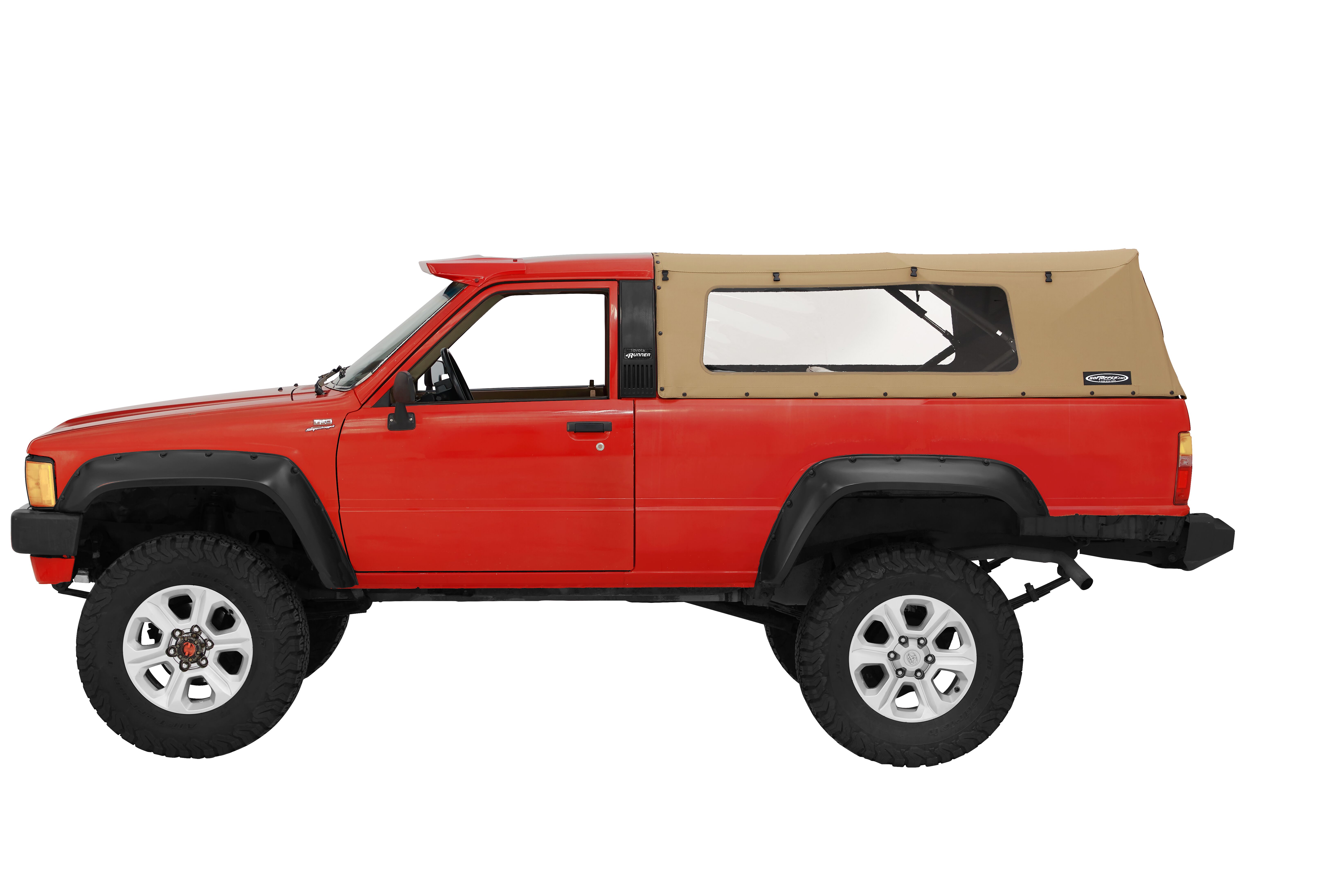
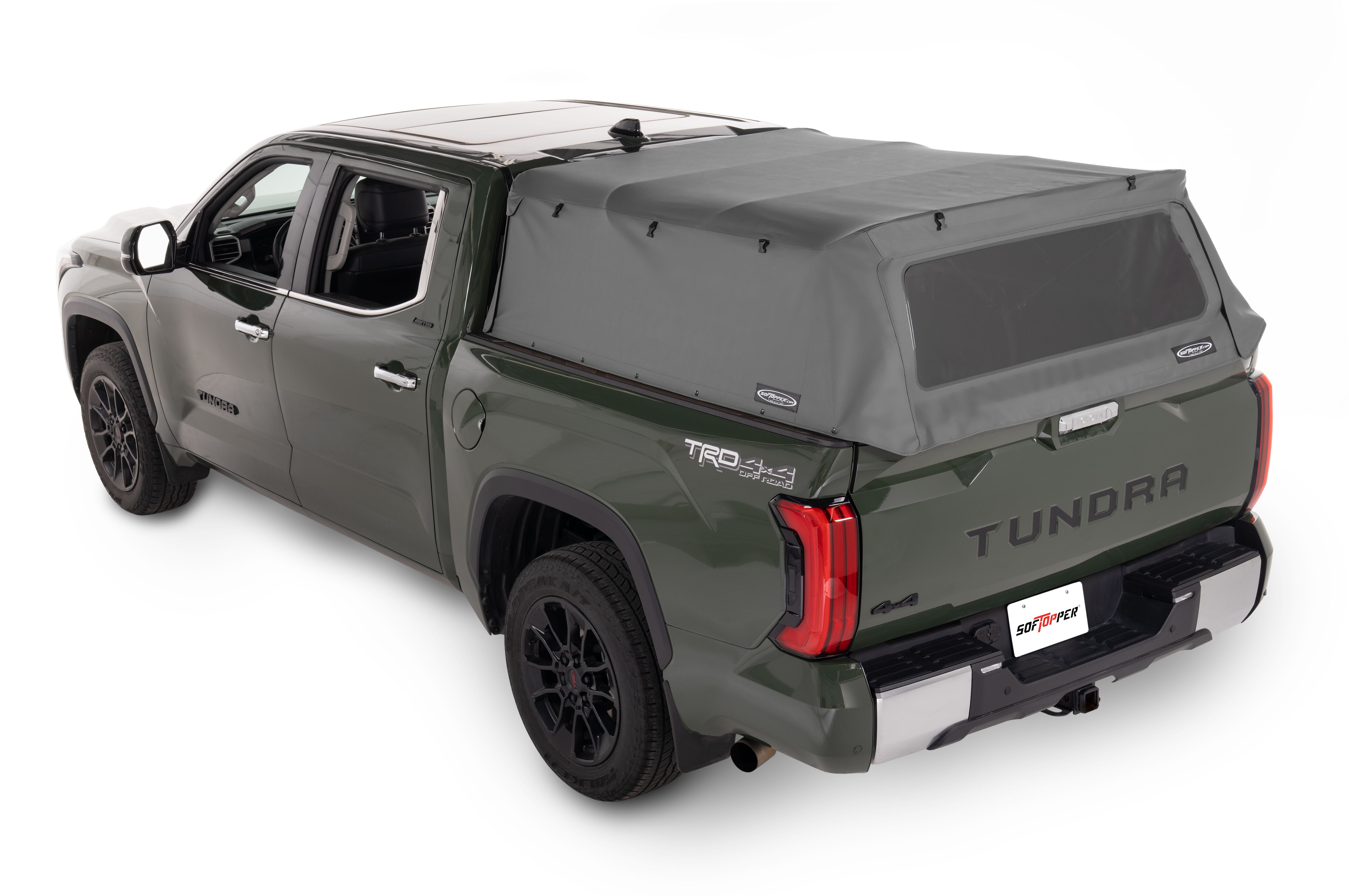
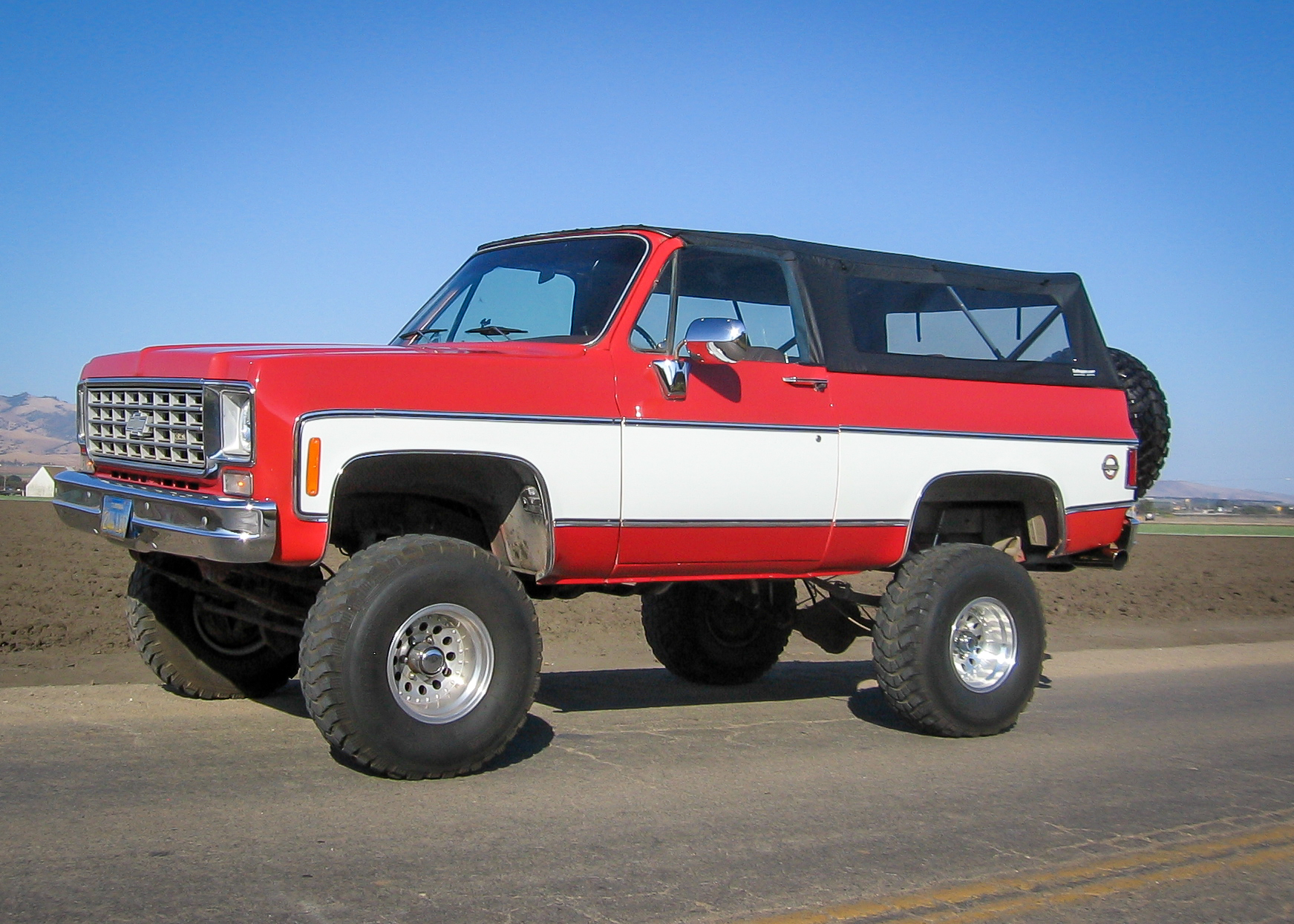
Softopper soft truck tops give you cab-high covered space over your truck bed, with no permanent commitment. Most models install with no-drill clamps. The Standard fabric is 2-ply PVC-coated sailcloth, a waterproof vinyl fabric that’s also UV- and mildew-resistant.
Choose Standard Vinyl in black, tan, or grey, or Premium Black Twill, a triple-layer fabric with 33% woven acrylic and a dark tinted rear window. Twill isn’t offered on every model.
Covered when you need it. Full bed when you don’t.
Seal the Seams and Bed Rails
To stop seam leaks on a soft truck cap, find the drip after a rain or a hose test. Dry the area and apply seam sealer or Seam Grip along the stitching. Then check the bedrail weather stripping, which runs beneath the Softopper bed rails along both sides of the truck box, and replace it if worn.
Any sewn top can leak at the seams in a few trouble spots. Softopper sells seam sealer and bedrail weather stripping as replacement parts, so a small drip is a quick fix. As a habit, keep sleeping bags and electronics forward in the bed, away from the tailgate.
Contain Gear in Bins and Dry Bags
Even under a cover, pack as if the bed could get damp. Lidded bins and dry bags are the simplest form of waterproof truck bed storage. They protect gear if a seam drips or you open the rear panel in the rain.
- Dry bags for sleeping bags, clothes, and anything that has to stay dry
- Lidded bins for the camp kitchen, tools, and recovery gear
- A small gasketed case for electronics, first aid, and paperwork
- A separate bag for wet jackets, muddy boots, and damp towels
Secure Everything so It Can't Shift
To keep gear from shifting, load heavy, hard items first and strap them down with ratchet straps. Wedge soft items like duffels and sleeping bags into the gaps, put awkward pieces by the wheel wells, and keep the cooler within reach. Gear that can’t slide won’t rub holes in dry bags or pop a bin lid on a rough road.
This approach follows Outside’s guide to packing a pickup for camping, and it works just as well under a cover.
Keep Air Moving to Beat Condensation
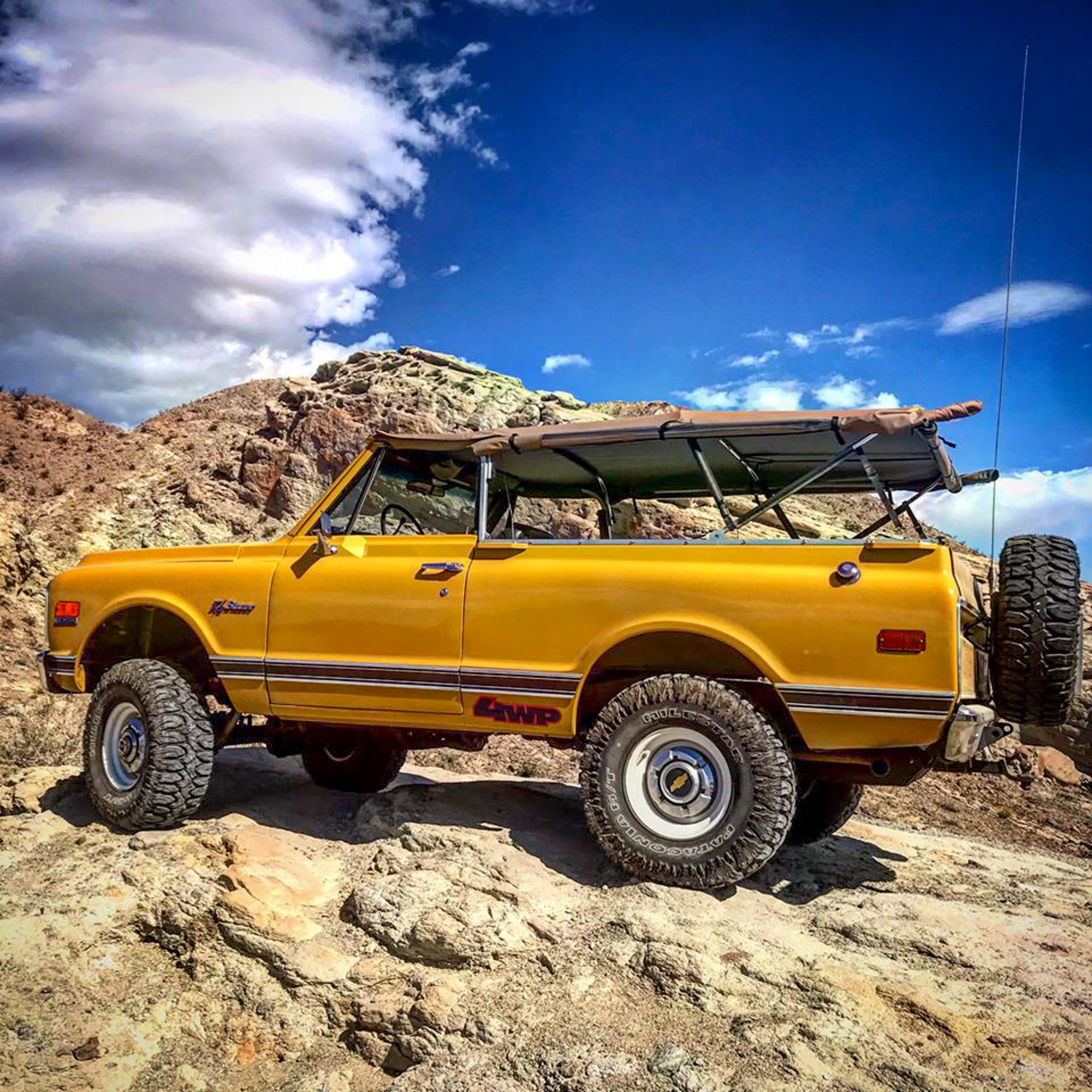
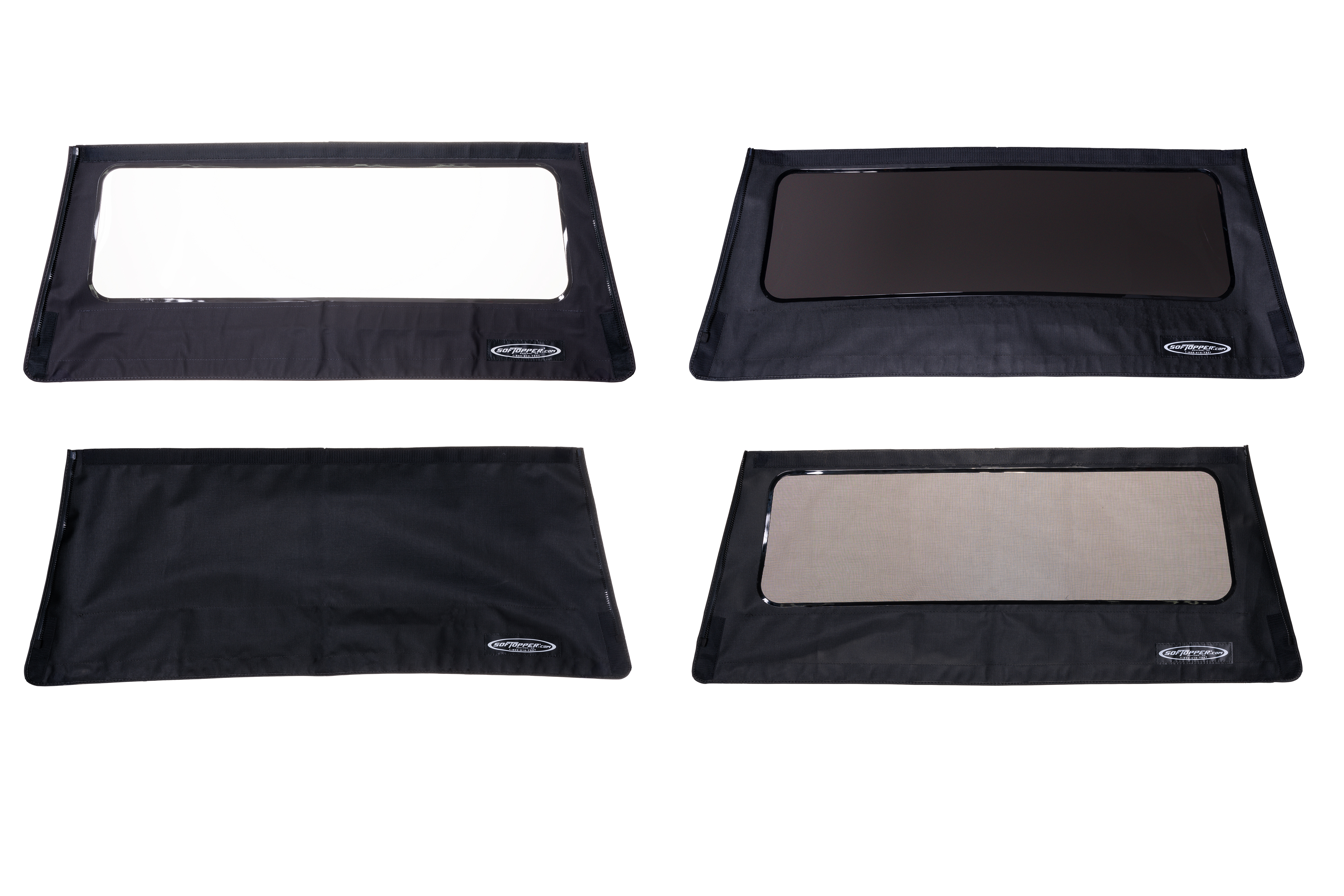
To prevent condensation under a truck cover, prioritize airflow over a tight seal. On a Softopper, swap a mesh panel in for the front or rear window, or roll up into Safari Mode at camp. In cold weather, unzip a solid panel just a crack so moist air from your breath and wet gear can escape.
Your Softopper ships with clear vinyl windows. Tinted, mesh, and solid panels are sold separately and swap in individually. Mesh helps on warm nights, and a solid panel is good for cold months.
When you get home, unload wet gear and let the bed and the top dry out. For cleaning and seasonal care, follow the Softopper care guide. One tip from it: sweep snow off if more than 12 inches of light snow piles up.
Tarp, Tonneau, Hard Shell or Soft Truck Top: Which Keeps Gear Dry?
Soft truck tops handle rain well on most trips: the fabric sheds water, and weather stripping seals along both sides of the truck box. Seam sealer fixes the occasional drip at sewn seams, but a hard shell still seals and locks better. A soft truck top wins on versatility: cab-high covered space, low weight, and a full open bed in seconds.
Option
Weather Protection
Gear Height
Full-Bed Access
Notes
Tarp
Fair if tied down tight; can parachute and let water in at highway speed
Any height, but loads can shift under it
Yes, once you untie it
Low cost and flexible, but needs constant checking
Tonneau Cover
Good against rain from above
Limited to bed-rail height
Depends on style; folding and roll-up types open quickly
Low profile; tall gear won’t fit underneath
Hard Shell Camper
Strongest seal of the four
Cab-high or taller
No; access is through the tailgate and rear door, and removal is a bigger job
Rigid and lockable; heavier and more permanent
Soft Truck Top
Good when seams and bed rails are sealed; not a match for a hard shell
Cab-high
Yes; retracts toward the cab in seconds, or removes by lifting the frame off the pivot pins
Lightweight and versatile; not lockable, so pair it with a lock box
If you need sealed, lockable storage every night of the year, a hard shell is the honest answer. If your weekends mix camping with hauling bikes, firewood, or a dog crate, a soft truck top lets the truck stay a truck.
Snapped for the drive. Safari Mode at camp. Retracted toward the cab when the load gets big, with your rear-window visibility intact.
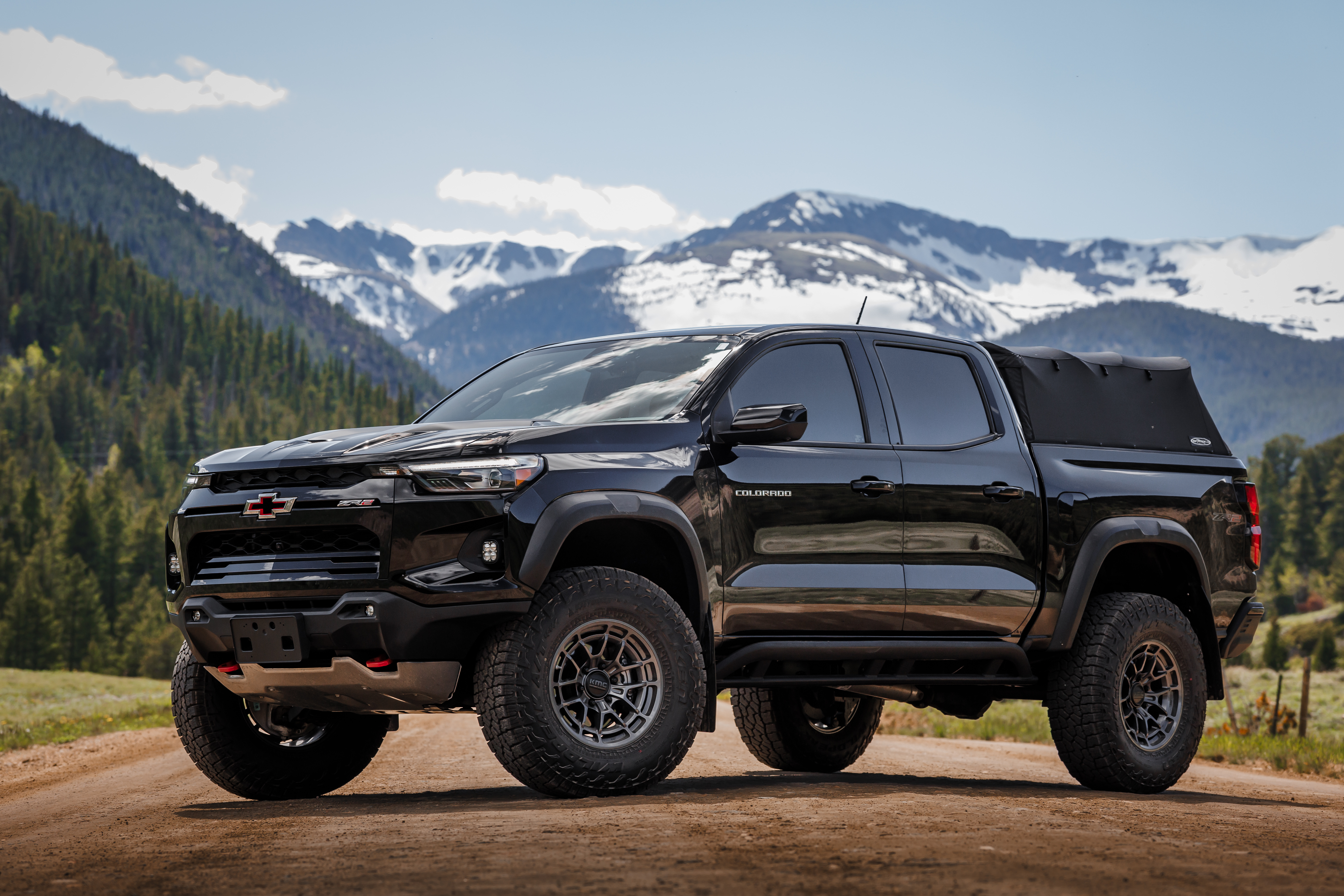
Softopper builds vehicle-specific models with 50-plus fitments, from the Ford Maverick to the 8-ft Super Duty. Popular setups include the Softopper for the Toyota Tacoma and fitted models across the Ford F-Series lineup. Owners of the Ram 1500, 2500 and 3500 can choose from multiple year ranges and bed lengths.
How to Organize a Truck Bed for a Weekend Trip
To organize a truck bed for a weekend trip, pack in zones based on when you’ll need each item. Strap heavy camp gear up front, keep the cooler and kitchen near the tailgate, and put small things in overhead pockets. Good truck bed organization means you can find dinner, a headlamp, or a rain jacket without unloading everything.
Zone the Bed by When You Need It
- Up front by the cab, strap down heavy gear you won’t need until camp, like water jugs and the tent.
- Along the wheel wells, tuck awkward items such as camp chairs and a folding table.
- Near the tailgate, keep the cooler, kitchen bin, and anything you’ll want at a trailhead stop.
- Overhead, stash headlamps, gloves, maps, and other small items you reach for often.
Softopper’s double-pull zippers let you open and close the rear panel from outside or inside the bed. That keeps the tailgate zone easy to reach whether you’re standing at the truck or sitting in the bed.
Use the Space Overhead
The space under the top is one of the easiest truck bed storage ideas to miss. The ST Overhead Organizer clips around the Softopper frame on the inside of the top. It gives you three main mesh zipper pockets for camp gear, dog essentials, or tools, and it costs $49.99.
You can leave it attached when you retract your Softopper. With gear inside, the top won’t retract quite as compactly, and you can use the safety straps to secure the retracted Softopper (per Softopper’s product Q&A).
Go Vertical with a Bed Rack
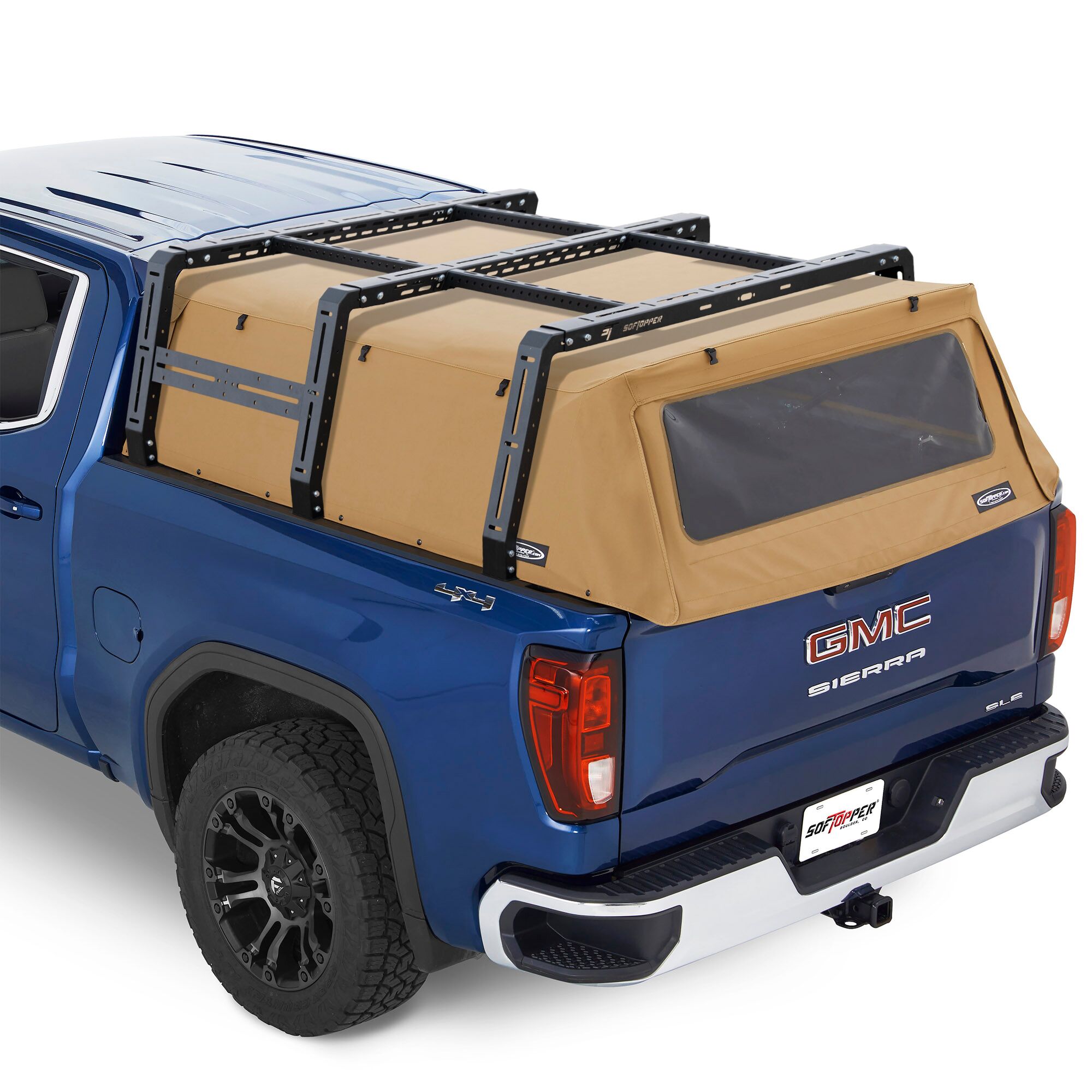
When the bed fills up, build up. The Exo Truck Bed Rack mounts under the Softopper bed rails and works with the top snapped, in Safari Mode, or retracted. It also stands on its own if you don’t run a top.
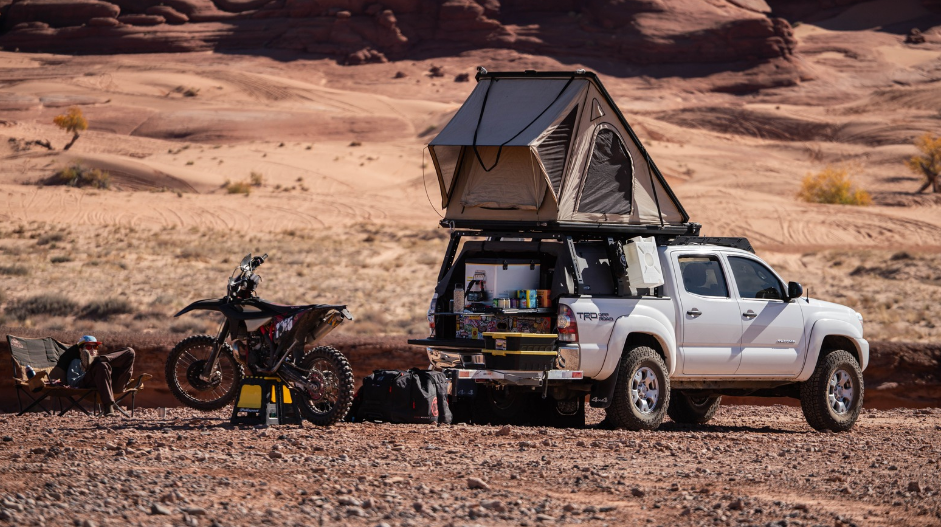
The rack includes 2 accessory panels and 4 tent bars, and it supports up to 1,000 lbs static load. Softopper doesn’t sell rooftop tents or awnings, but tent bars and awning mounts let you run your own.
It’s built from 10, 12, and 14-gauge HRPO steel with a dual-layer finish of E-coat plus matte black powder coat. One tradeoff: with the rack installed, retracting the top takes an extra step, and the rack stays overhead.
Is Gear Safe in a Truck Bed Overnight?
A covered truck bed keeps gear out of sight and out of the weather, but a soft truck top is not a lockable hard cap. The smart setup pairs your Softopper with an aftermarket lock box for valuables like cameras, laptops, and tools. You get secured storage for what matters and still keep an open, retractable bed for everything else.
Sleeping in the bed? The double-pull zippers open from inside, and #10 YKK zippers keep the rear window secure.
Bear-country note: Never store food, coolers, or scented items where you sleep. Use bear lockers or approved bear-resistant containers where required, and follow local rules. A fabric top is not a food locker.
Weekend Packing Checklist
A weekend packing checklist for a covered truck bed covers four things. Pack the cover, containers that keep water out, straps and organizers that hold gear in place, and airflow and sleep gear. Run through it before you leave to catch the small things that keep a wet weekend comfortable.
- Boot cover to protect your retracted Softopper if the weather changes
- Seam sealer or Seam Grip for a quick fix at camp
- Lidded bins for the kitchen, tools, and recovery gear
- Dry bags for sleeping bags, clothes, and electronics
- Separate bag for wet or muddy gear
- Ratchet straps for heavy, hard items
- Bed mat or wood slats to lift gear off the floor
- Insulated sleeping pad, since the top doesn’t insulate the bed floor
- Mesh window panel for airflow on warm nights
- Overhead organizer stocked with headlamps, gloves, and small items
- Aftermarket lock box for valuables
- Bear-resistant food storage where required
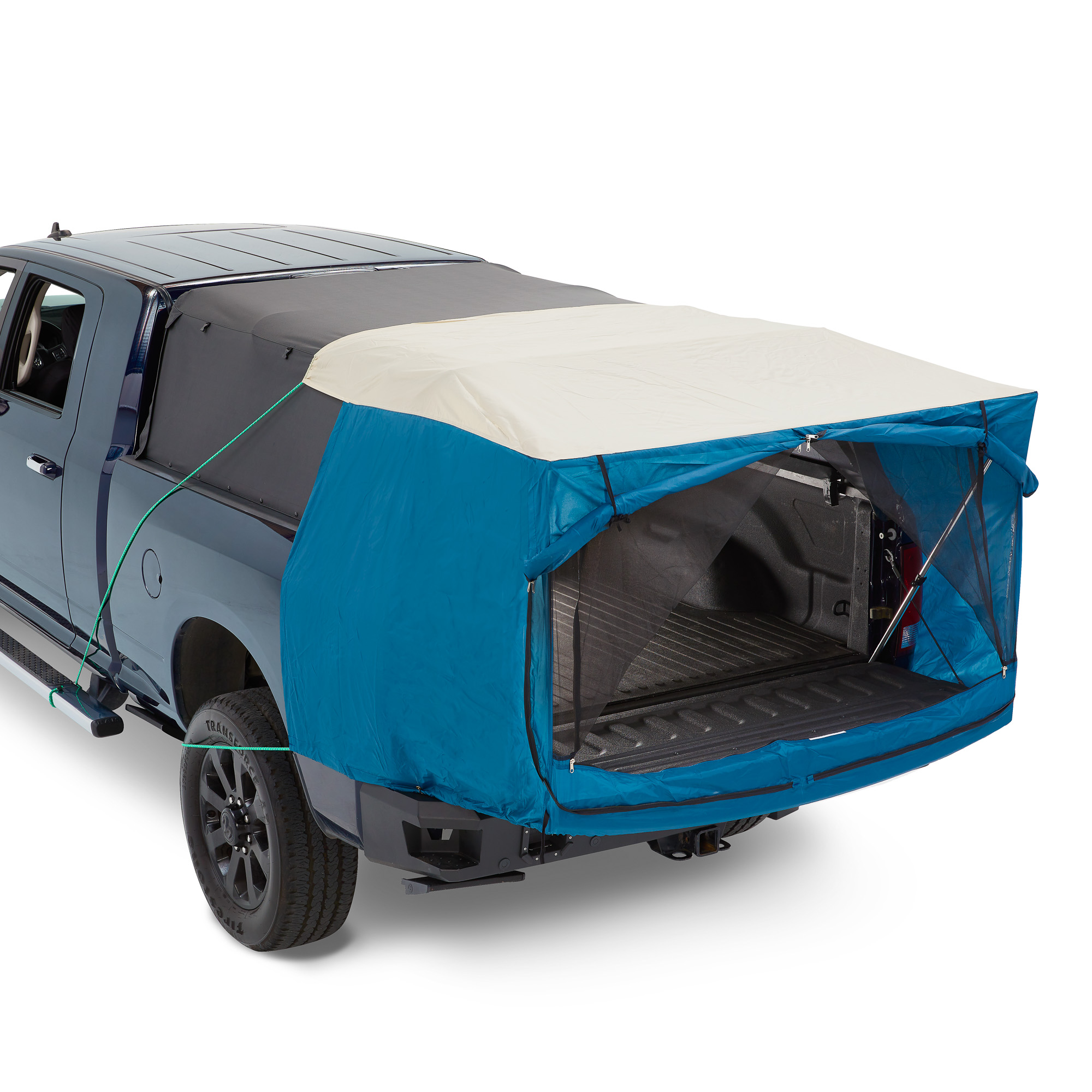
- Camper Top Tent in Mid-size or Full-size, which clips around the Softopper, for extra room at camp
Keeping your gear dry, organized and protected for weekend adventures gets easier when your truck adapts to the trip. Start with the Softopper truck top built for your bed. Then explore Softopper accessories to add the organizers, panels, and rack pieces that fit the way you camp.
Frequently Asked Questions About Keeping Gear Dry in a Truck Bed
These quick answers cover common questions about rain, seams, condensation, and overnight security in a covered truck bed.
An open truck bed won’t hold water like a tub, but anything in it still gets wet. Rain falls straight in, road spray kicks up, and water sits on the bed floor until it drains. A cover, sealed bins, and a raised floor keep your gear dry.
Yes, as long as the tarp is tucked tight and your load is strapped down underneath it. At highway speed, a loose tarp can parachute, flap, and let rain in. Secure the edges at several points and recheck them at every stop. A fitted cover takes that worry off the drive.
Start with a cover overhead, then seal the gaps. On a Softopper, bedrail weather stripping runs beneath the bed rails along both sides of the truck box, and seam sealer handles sewn seams. Inside, pack gear in lidded bins and dry bags and lift it off the floor, since some water can still get in.
A soft truck top handles rain well on most trips. Softopper’s Standard fabric is 2-ply PVC-coated sailcloth, a waterproof vinyl fabric, and weather stripping seals along both sides of the truck box. Sewn seams can leak in trouble spots, and seam sealer fixes that. A hard shell still seals tighter.
Find the leak after a rain or a hose test, then clean and dry the area. Apply seam sealer or Seam Grip along the stitching and let it cure before the next storm. Both are sold in Softopper replacement parts, along with bedrail weather stripping if the seal along your bed rails is worn.
Prioritize airflow over a tight seal. Swap a mesh panel in for the front or rear window, or roll the side panels and rear window up into Safari Mode at camp. In cold weather, unzip a solid panel just a crack. Keep wet gear in its own bag and dry everything out after the trip.
Pack in zones based on when you need things. Strap heavy, hard items down first, wedge soft items between them, and tuck awkward pieces by the wheel wells. Keep the cooler near the tailgate where you can reach it. Use overhead mesh pockets for headlamps, gloves, and other small items you grab often.
Yes. The ST Overhead Organizer clips around the Softopper frame on the inside of the top, and it can stay attached when you retract your Softopper. With gear in the pockets, the top won’t retract as compactly, and safety straps can secure it. Lighter loads keep the fold neater.
A soft truck top keeps gear covered and out of sight, but it isn’t a lockable hard cap. Leave everyday camp gear under the top and move valuables into an aftermarket lock box in the bed or into the locked cab. That way you get secured storage plus an open, retractable bed.
