











.jpg)

.jpg)
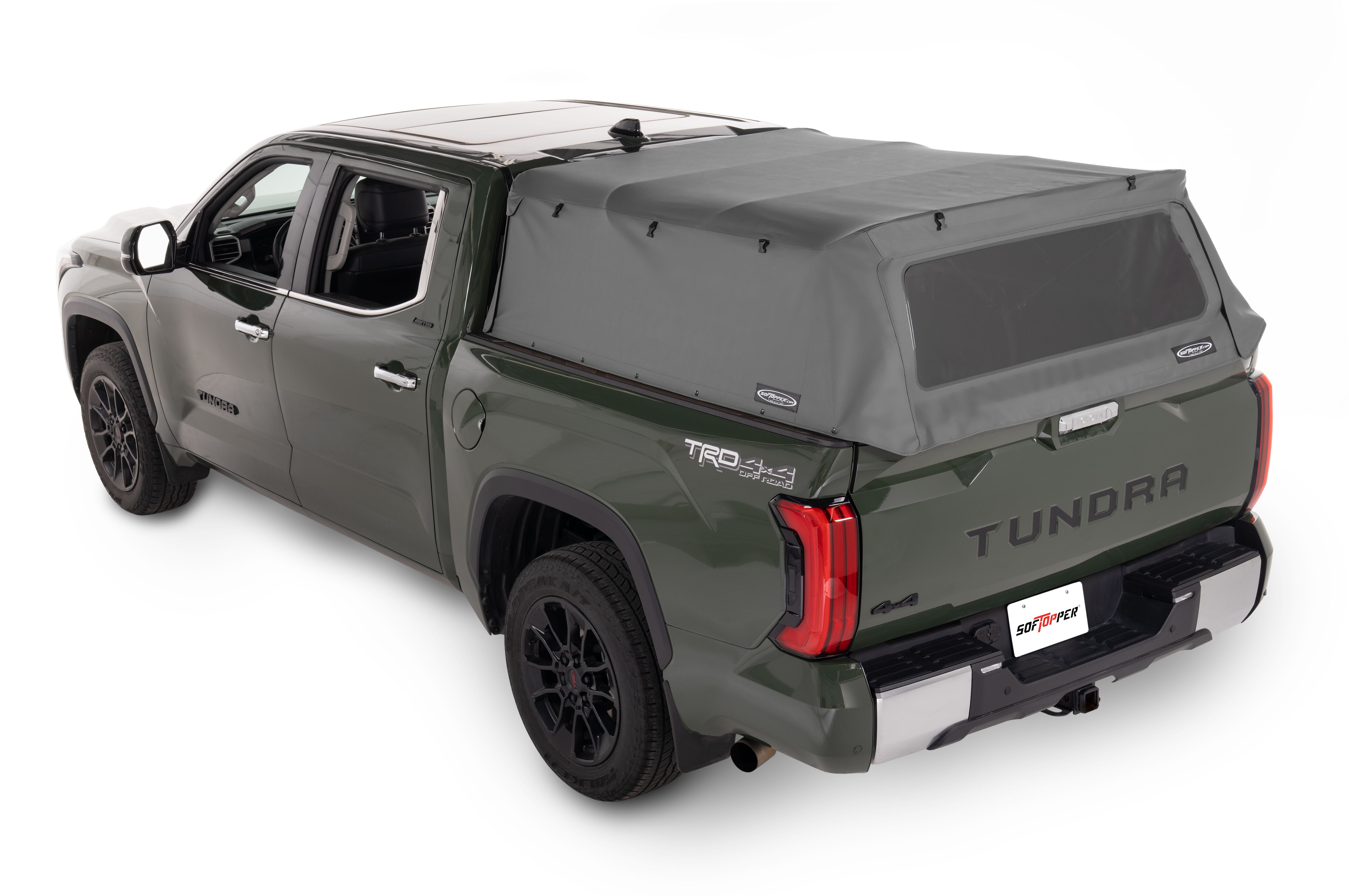
.jpg)
.jpg)
.jpg)


.jpg)



Key Takeaways
- Your Softopper is built for year-round use and handles snow on top, so winter care for your soft truck top starts with sweeping it clear once light snow gets past 12 inches.
- Clear vinyl windows can crack very easily below 40 degrees, so let them warm up before you roll up panels, fold the top forward, or wipe the windows down.
- Fall is the time to get ahead of winter, while it’s still warm enough to deep clean, apply protectant, seal seams, and lube zippers before road salt shows up.
- Beating condensation comes down to airflow, so on cold nights, unzip a solid window panel just a crack and let the moisture in the bed find its way out.
A truck should stay a truck, all year. That’s the idea behind your Softopper: covered protection when you need it and a full open bed when you don’t, even in January. Winter care for your soft truck top keeps it that way when the temperature drops.
Your Softopper is designed for year-round use, so winter doesn’t call for anything dramatic. It comes down to four things: the vinyl windows, the seams, the zippers, and moisture inside the bed. Here’s how to handle each one, with the Softopper Care Guide covering the rest.
Can a Soft Truck Top Handle Snow?
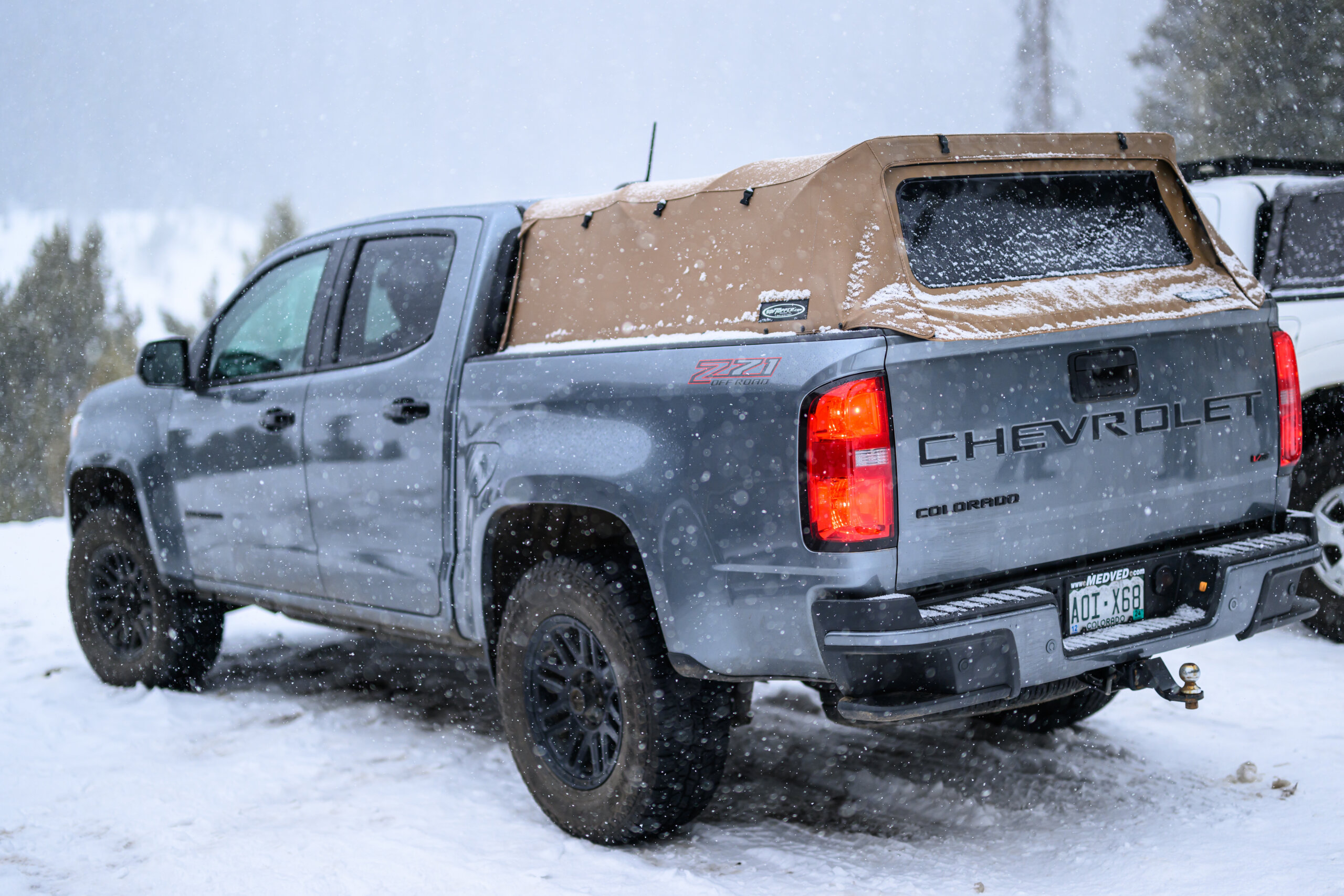
Yes. Your Softopper is engineered to withstand snow loads, so a normal snowfall on top is nothing to worry about. Once more than 12 inches of light snow has built up, sweep it off. Use a soft broom or snow brush on the fabric and push the snow off the sides. Keep scrapers off the top entirely, and keep brushes off the clear vinyl windows.
That 12-inch guideline is for light, fluffy snow. Wet, heavy snow is worth clearing sooner, before it has a chance to sit, melt, and refreeze.
How to Winterize Your Soft Truck Top: A Fall Prep Checklist
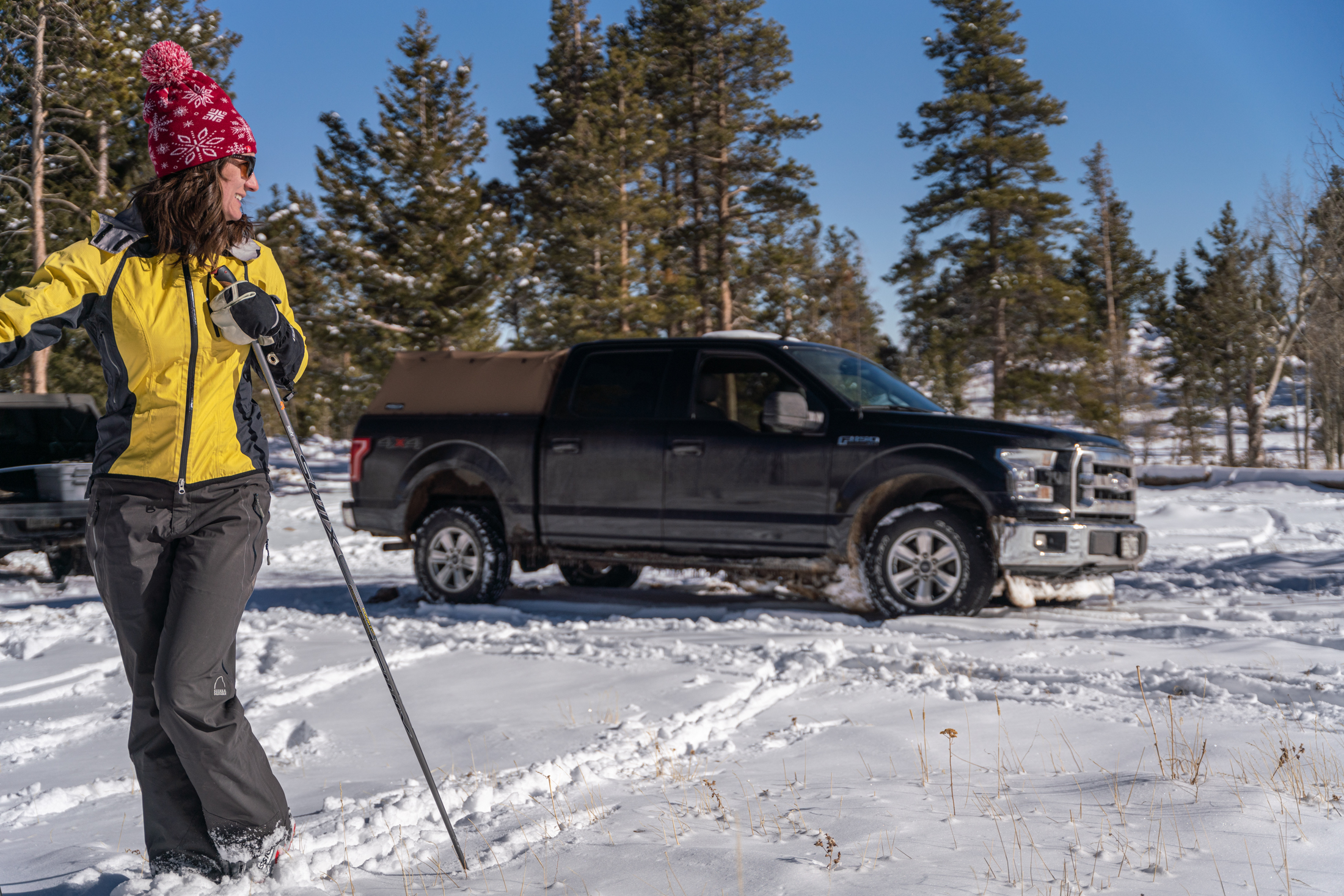
To winterize your soft truck top, do the work in fall while it’s still warm out. Deep clean and dry the top, apply protectant, seal any seams that have leaked, and clean and lube the zippers. Then check the bedrail weather stripping, replace worn buckles, brackets, or snaps, and decide whether solid window panels make sense for your winter.
- Deep clean and dry the top. Follow the step-by-step cleaning guide using the ST Cleaner/Protectant Pack, then let everything air-dry completely.
- Protect the fabric. On Standard Vinyl, apply the protectant from the pack. On Premium Black Twill, skip the pack: wash with a light soap like Dawn, then apply Twill Protectant.
- Seal the seams while it’s still warm. Treat trouble spots with Seam Sealer or Seam Grip. Seam Grip goes on between 60° and 100°F and cures in 8 to 12 hours.
- Clean and lube the zippers. Zipper Cleaner & Lubricant clears out sand, dirt, and salt, then leaves a protective film against rust and corrosion.
- Check the weather stripping. The bedrail weather stripping runs beneath the Softopper bed rails, sealing along both sides of the truck box. Replace it if it’s flattened or torn.
- Look over buckles, brackets, and snaps. These are the most popular replacement parts, made specifically for the Softopper. Swap out anything worn before the cold sets in.
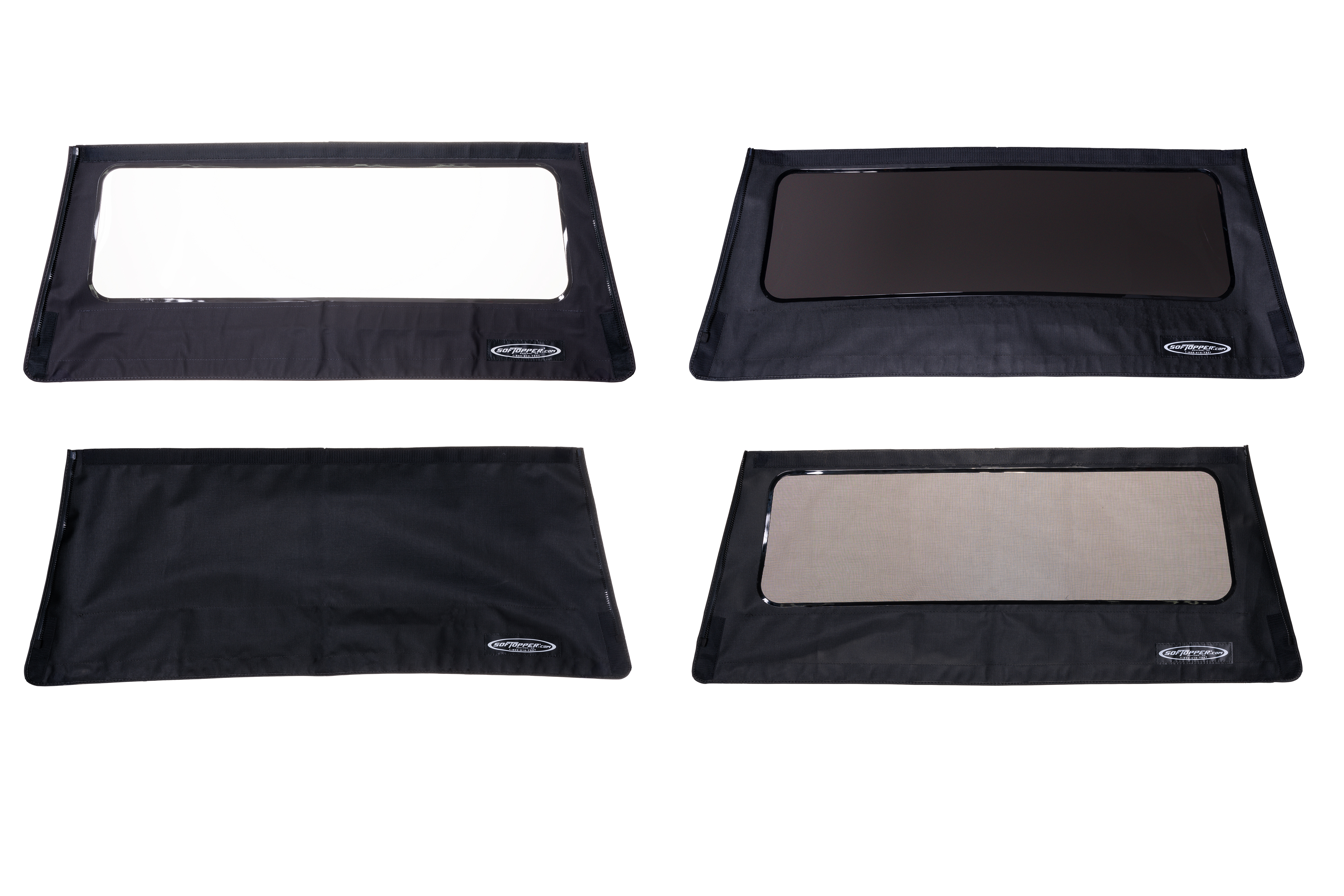
- Consider solid window panels. A solid panel adds warmth and protection in the chilly months. Solid window panels are sold separately and swap in individually.
Timing matters most on the seams. As with any sewn top, seams can leak in trouble spots, and cold weather is a bad time to find them. Seam Grip needs 60°F or warmer and relative humidity above 40% to go on right.
If fall has already turned cold, wait for a warm afternoon or work in a heated garage. Once it cures, Seam Grip is rated for use between -20° and 180°F, so it holds up fine through winter.
That 12-inch guideline is for light, fluffy snow. Wet, heavy snow is worth clearing sooner, before it has a chance to sit, melt, and refreeze.
How Do You Clear Snow and Ice Without Damaging Your Top?
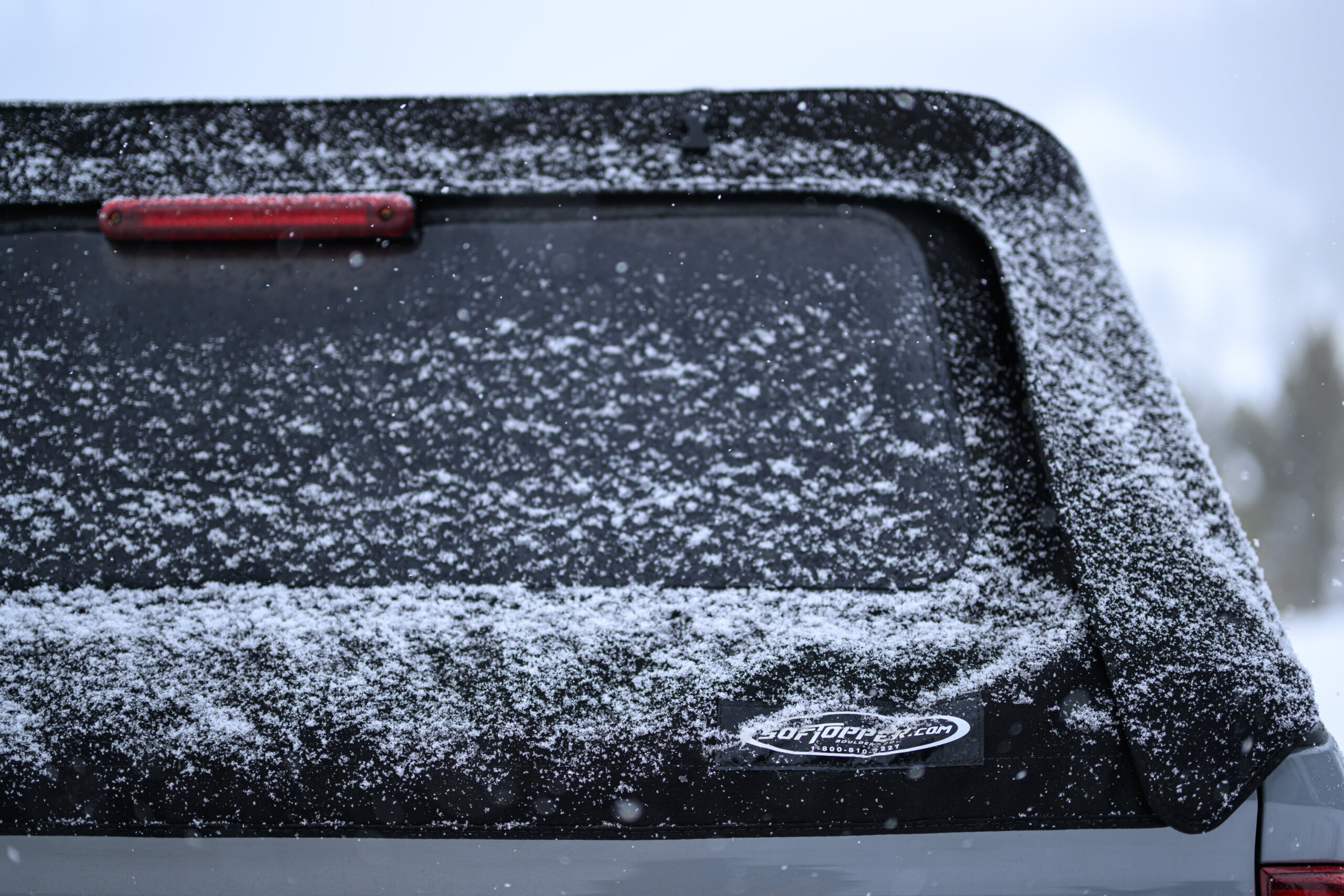
Brush snow off the fabric with a soft broom or snow brush, and push it off the sides of the truck. Keep scrapers away from the fabric and the clear vinyl windows. For ice, let the sun or a warm garage soften it rather than chipping at it, and never force a frozen zipper. Waiting an hour beats replacing a window panel.
- Use a soft broom or snow brush on the fabric only.
- Skip the ice scraper on every part of the top.
- Let ice on the windows melt in the sun or a warm garage.
- Leave frozen zippers alone until they thaw, then work them gently.
- Hold off on folding the top forward until the vinyl warms up.
How Do You Clear Snow and Ice Without Damaging Your Top?
Yes. Clear vinyl stiffens in the cold, and Softopper’s warranty guidance notes it can crack very easily at temperatures below 40 degrees. That’s why you should use extra caution when rolling up panels, folding the top forward, or cleaning the windows in freezing weather. Whenever you can, let the vinyl warm up first and handle cold windows gently.
Cleaning cold windows follows the same rules as summer, with more patience. Rinse off grit and salt first so you don’t scratch the vinyl. Then wash with a light soap like Dawn and water on a microfiber cloth, rinse, and dry with a fresh microfiber.
Never wipe the windows while they’re dry, and never use a brush or paper towel on them. Skip any cleaner with alcohol, silicone, or wax. For haze and minor scratches, ST Vinyl Window Cleaner polishes the vinyl and helps protect it against UV.
Should You Retract or Roll up Your Top in Freezing Weather?
When you can, wait. Try not to roll the side panels and rear window up into Safari Mode, or fold the top forward, while it’s below freezing. If you need the full bed on a cold morning, give the truck some time in the sun or a garage first.
You might also notice the fabric is a little tighter to snap in cold weather. That’s normal and not a problem. A new top also stretches to its happy place over the first few weeks after install, so a late-fall install may feel snug at first.
- Use a soft broom or snow brush on the fabric only.
- Skip the ice scraper on every part of the top.
- Let ice on the windows melt in the sun or a warm garage.
- Leave frozen zippers alone until they thaw, then work them gently.
- Hold off on folding the top forward until the vinyl warms up.
How Do You Stop Condensation Under a Truck Topper in Winter?
Give it airflow. Condensation forms when warm, damp air inside the bed meets cold fabric and windows, so sealing everything tighter tends to make it worse. In cold weather, unzip a solid window panel just a crack to let moisture escape. Bring wet gear inside to dry rather than leaving it in the bed overnight.
Your Softopper’s double-pull zippers let you open the rear panel from inside or outside the bed, so small airflow tweaks are easy. Keep in mind that a topper covers the bed but doesn’t insulate the bed floor. If you sleep or store cold-sensitive gear back there, lay down an insulated pad.
Fabric choice plays a part too. Premium Black Twill’s triple-layer construction adds insulation, which matters most for cold-weather temperature swings. Day to day, airflow is still the bigger difference. Our winter camping guide covers cold nights under your Softopper in more detail.
Road Salt, Car Washes, and Winter Washing
Road salt is hard on zippers and hardware, so rinse your Softopper more often in winter. If you use a car wash, go touchless only, then rinse any residual waxes or cleaning agents off the windows afterward. Between washes, a quick freshwater rinse of the zippers, snaps, and buckles keeps salt from building up where it does the most harm.
The anodized aluminum frame is corrosion-resistant, but the smaller hardware still benefits from a rinse. When zippers start to feel gritty, run Zipper Cleaner & Lubricant along them. Its built-in brush works salt out of the teeth, and it contains no silicone or wax.
For a full wash, keep the usual routine: mild soap about once a month, with no bleach or harsh detergents. Keep pressure washers and abrasive brushes off the seams and zippers. Let the top air-dry completely before you fold it forward, which helps prevent mildew.
Winter Care for Your Soft Truck Top at a Glance
Here’s the whole winter routine in one place. Most of the heavy lifting happens on one fall prep day, and the rest is quick upkeep after storms and salty drives. Use this table as a reference when the weather turns, and check the Care Guide whenever you want the full step-by-step for a specific task.
Task
When
What to Use
Deep clean and protect
Fall, before freezing temps |
ST Cleaner/Protectant Pack (vinyl) or light soap plus Twill Protectant (twill)
Seal seams
Warm fall days (Seam Grip needs 60°F or warmer)
Seam Sealer or Seam Grip
Clean and lube zippers
Fall, then whenever salt makes them gritty
Zipper Cleaner & Lubricant
Check stripping and hardware
Fall
Bedrail weather stripping, buckles, brackets, snaps
Sweep off snow
Once more than 12 inches of light snow builds up
Soft broom or snow brush (fabric only)
Rinse off road salt
After salty drives
Fresh water or a touchless car wash
Wash the exterior
About once a month
Mild soap and water
Clean the windows
As needed, gently below 40°F
Light soap like Dawn, microfiber, ST Vinyl Window Cleaner
Manage condensation
Cold nights and wet days
A solid window panel unzipped a crack
Should You Remove Your Softopper for Winter?
No. There’s no reason to remove your topper in the winter, because it’s designed for year-round use. Keep it on, clear heavy snow, and give the bed some airflow. If you’re parking the truck for the season, clean and dry the top first, then store the truck out of direct sun when you can.
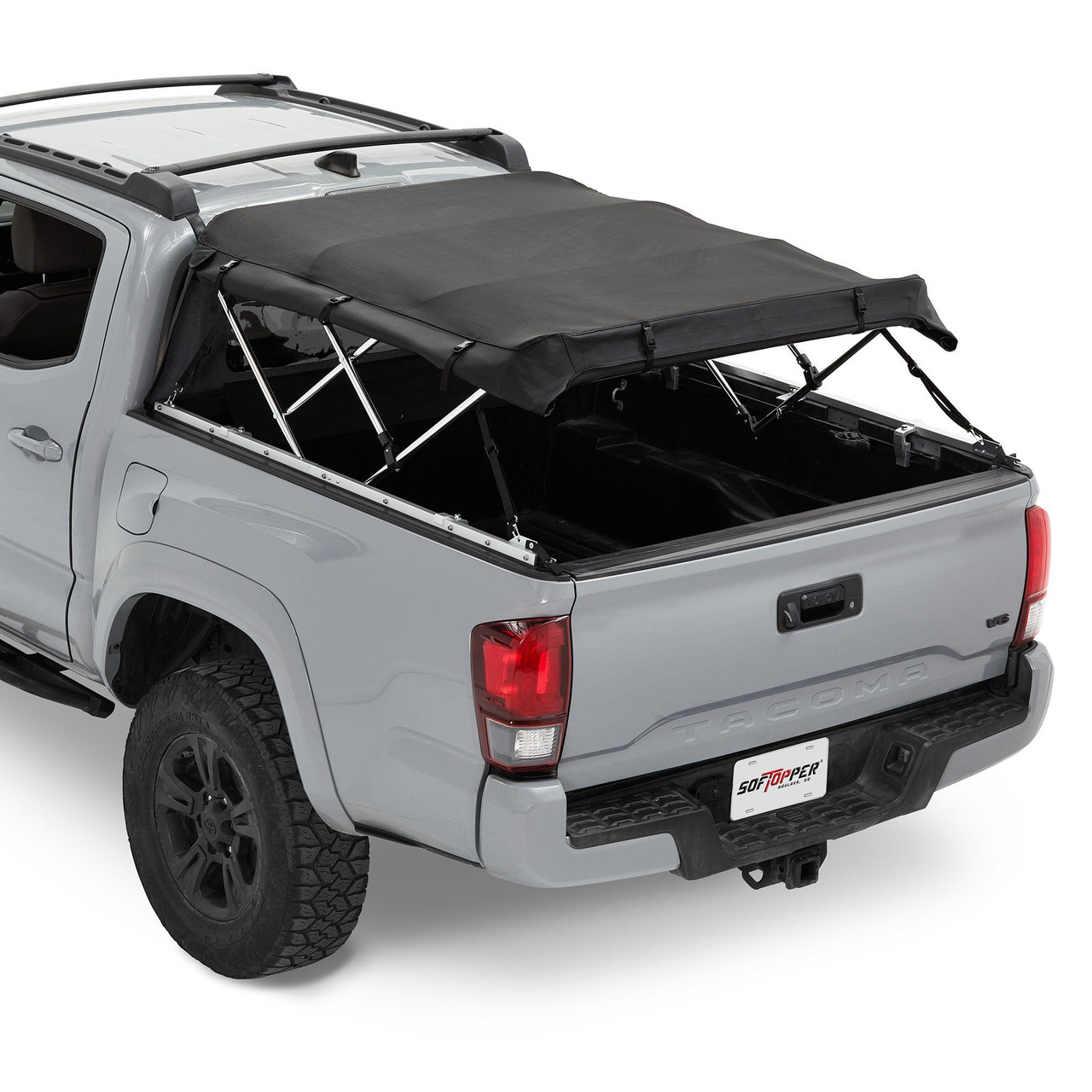
If you want an open bed for a winter load, you have two options. Retracted, the top folds toward the cab while the frame stays mounted. Removed means lifting the frame off the pivot pins.
Either way, pick a warmer moment so the windows aren’t cold and stiff. If you drive retracted, use the boot cover included with every kit. It protects the folded top from slush and road grime.
Winter care for your soft truck top comes down to one good fall prep day and some patience on cold mornings. Keep the Care Guide handy, and stock up from the Soft Top Cleaning Care line before the first freeze. For more tips from the Softopper community, browse More Posts.
Frequently Asked Questions About Winter Care for Your Soft Truck Top
Here are straight answers to the cold-weather questions Softopper owners ask most.
Yes. Your Softopper is engineered to withstand snow loads, so a normal snowfall on top is nothing to worry about. Once more than 12 inches of light snow has built up, sweep it off with a soft broom or snow brush. Keep scrapers off the fabric and brushes off the clear vinyl windows.
No. There’s no reason to remove your Softopper in the winter, because it’s designed for year-round use. Keep it on, clear heavy snow, and give the bed some airflow. If you’re parking the truck for the season, clean and dry the top first and store the truck out of direct sun.
Brush snow off the fabric with a soft broom or snow brush and push it off the sides of the truck. Never scrape the fabric or the clear vinyl windows. Let ice soften in the sun or a warm garage instead of chipping at it, and wait for frozen zippers to thaw before you work them.
Yes. Clear vinyl can crack very easily at temperatures below 40 degrees, so use caution in freezing weather. When you can, let the vinyl warm up before you roll up panels, fold the top forward, or clean the windows. Handle cold windows gently and never wipe them while they’re dry.
Prioritize airflow over sealing. In cold weather, unzip a solid window panel just a crack so moisture can escape, and bring wet gear inside to dry. A topper doesn’t insulate the bed floor, so lay down an insulated pad if you sleep or store cold-sensitive gear back there.
It’s best to seal seams in fall while it’s still warm. Seam Grip needs an application temperature between 60° and 100°F with relative humidity above 40%, and it cures in 8 to 12 hours. If it’s already cold, wait for a warm day or work in a heated garage.
Rinse salt off the zippers with fresh water after salty drives, then treat them with Zipper Cleaner & Lubricant for Softoppers. Its built-in brush removes sand, dirt, and salt, and it leaves a protective film against rust and corrosion. If a zipper freezes, let it thaw before you open it.
Yes, as long as it’s a touchless car wash. Avoid any wash with brushes. Afterward, rinse residual waxes and cleaning agents off the windows, since cleaners with alcohol, silicone, or wax aren’t good for the clear vinyl. Let the top air-dry completely before you fold it forward to prevent mildew.
Premium Black Twill’s triple-layer construction adds insulation, which matters most for cold-weather temperature swings. Standard Vinyl handles winter well too, since every Softopper is designed for year-round use. Day to day, airflow makes the bigger difference for comfort and condensation. Twill isn’t available on every model, so check your fitment.
Fabric gets a little tighter in the cold, so snapping your Softopper on a freezing morning can take more effort. That’s normal and not a problem. A new top also stretches to its happy place over the first few weeks after install, so it settles in over time.
Yes, the bed will still get cold. A soft truck top keeps snow, wind, and road spray off your gear, but it doesn’t insulate the bed floor. Add an insulated pad for the floor, and consider Premium Black Twill or solid window panels for extra warmth and protection in chilly months.
